
.svg)
Some Deeper Aspects of Masonic Symbolism: A Short Treatise on Masonic Mysteries (Parts 1 & 2)
By
Corey Andrews
July 15, 2026
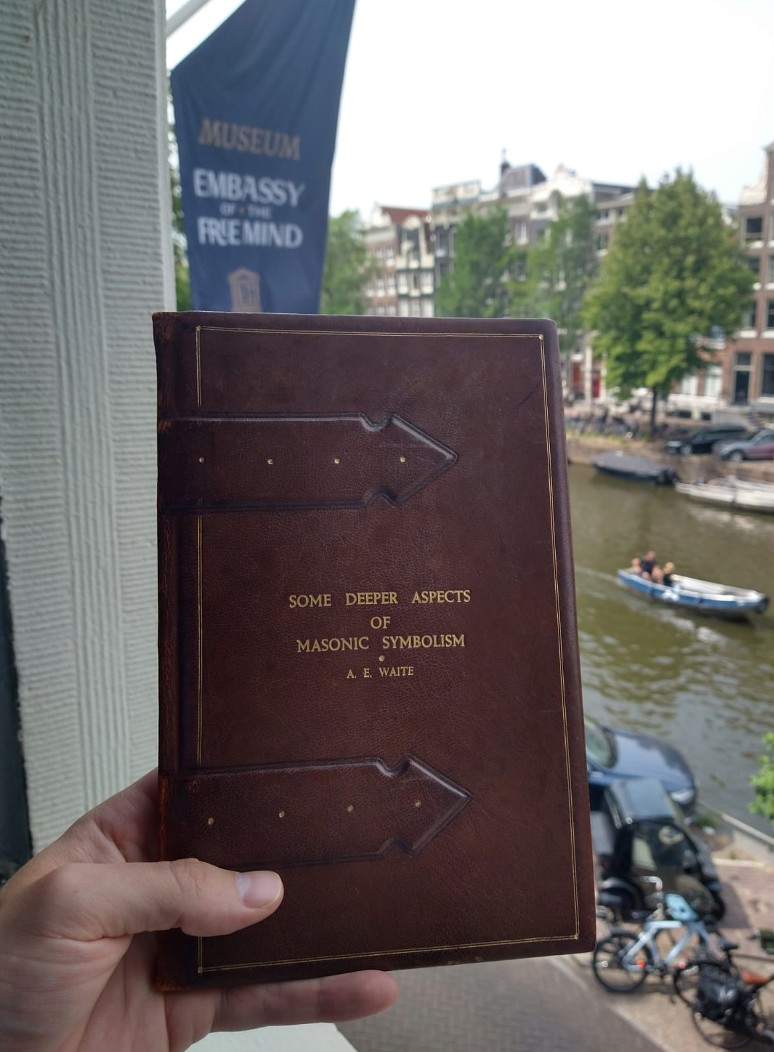
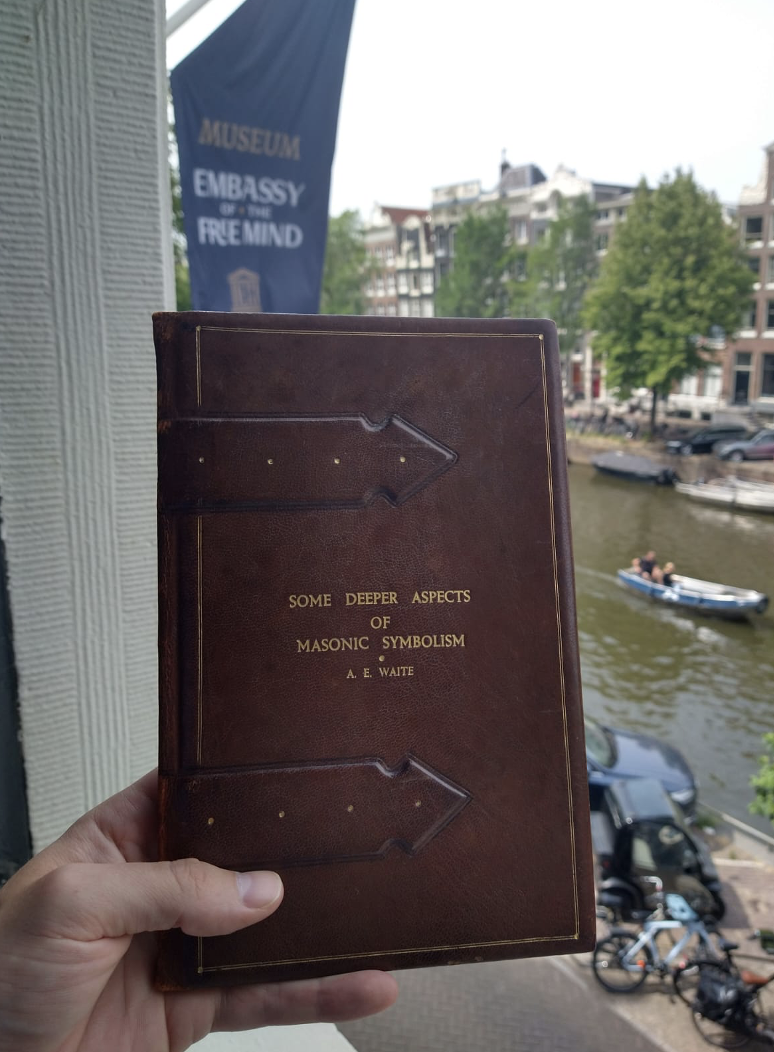
‘Some Deeper Aspects of Masonic Symbolism.’ by Arthur Waite, 1915.

Some Deeper Aspects of Masonic Symbolism: A Short Treatise on Masonic Mysteries (Parts 1 & 2)
‘Some Deeper Aspects of Masonic Symbolism.’ by Arthur Waite, 1915.

Some Deeper Aspects of Masonic Symbolism: A Short Treatise on Masonic Mysteries (Parts 1 & 2)
By
Corey Andrews
July 15, 2026
One of our returning characters to the Codex, and one of the most important authors and promoters of esoteric lore is - without a doubt – the British poet and ‘scholarly mystic’ Arthur Edward Waite (1857-1942). Over the span of his life, he wrote around 46 books, and also translated, edited, or introduced around 40 more works. In addition to their content of course, something which I deeply value about his books are the way in which they are bound! Most of them being printed around the crest of the 19th and 20th centuries, personally I think this period represents the ‘apogee’ or absolute summit for book printing, they are so visually beautiful and also feel like a dream in the hand.
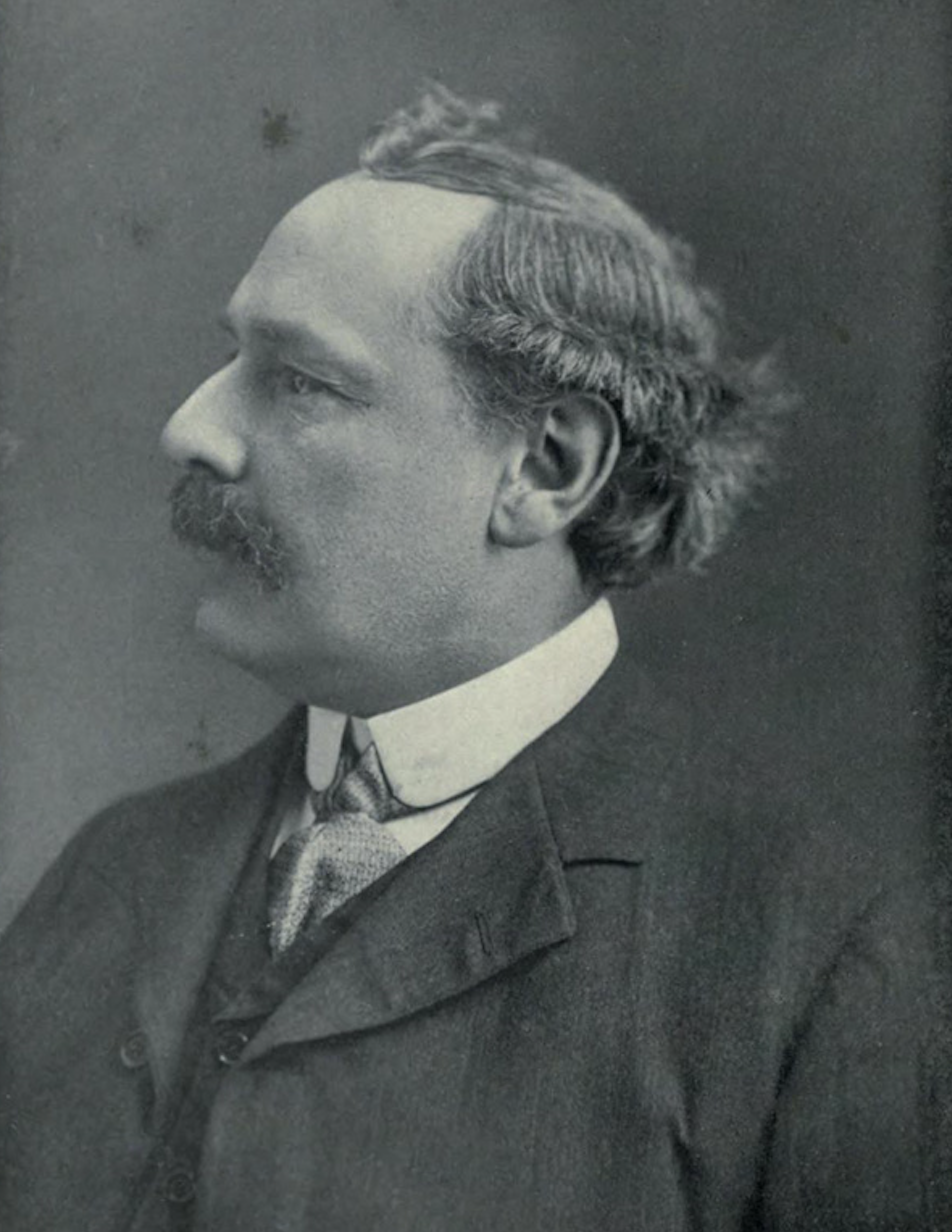
Waite wrote and published on an enormous variety of Western esoteric topics, though most centrally alchemy, magic, the holy grail, Rosicrucianism, and Freemasonry. He is also widely remembered for being a co-creator of the ‘Rider-Waite-Smith’ tarot deck which we have several early editions of in our collection.
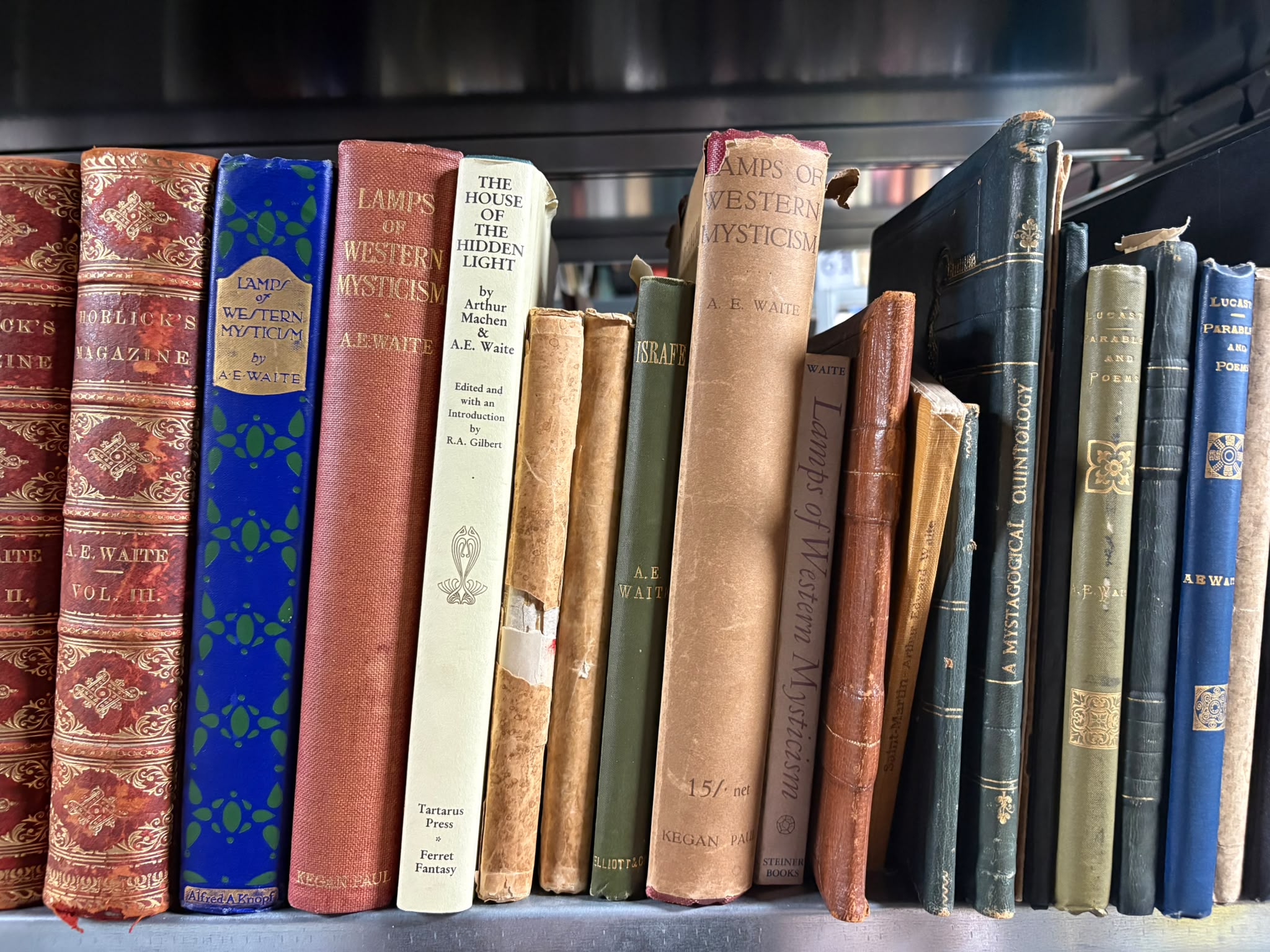
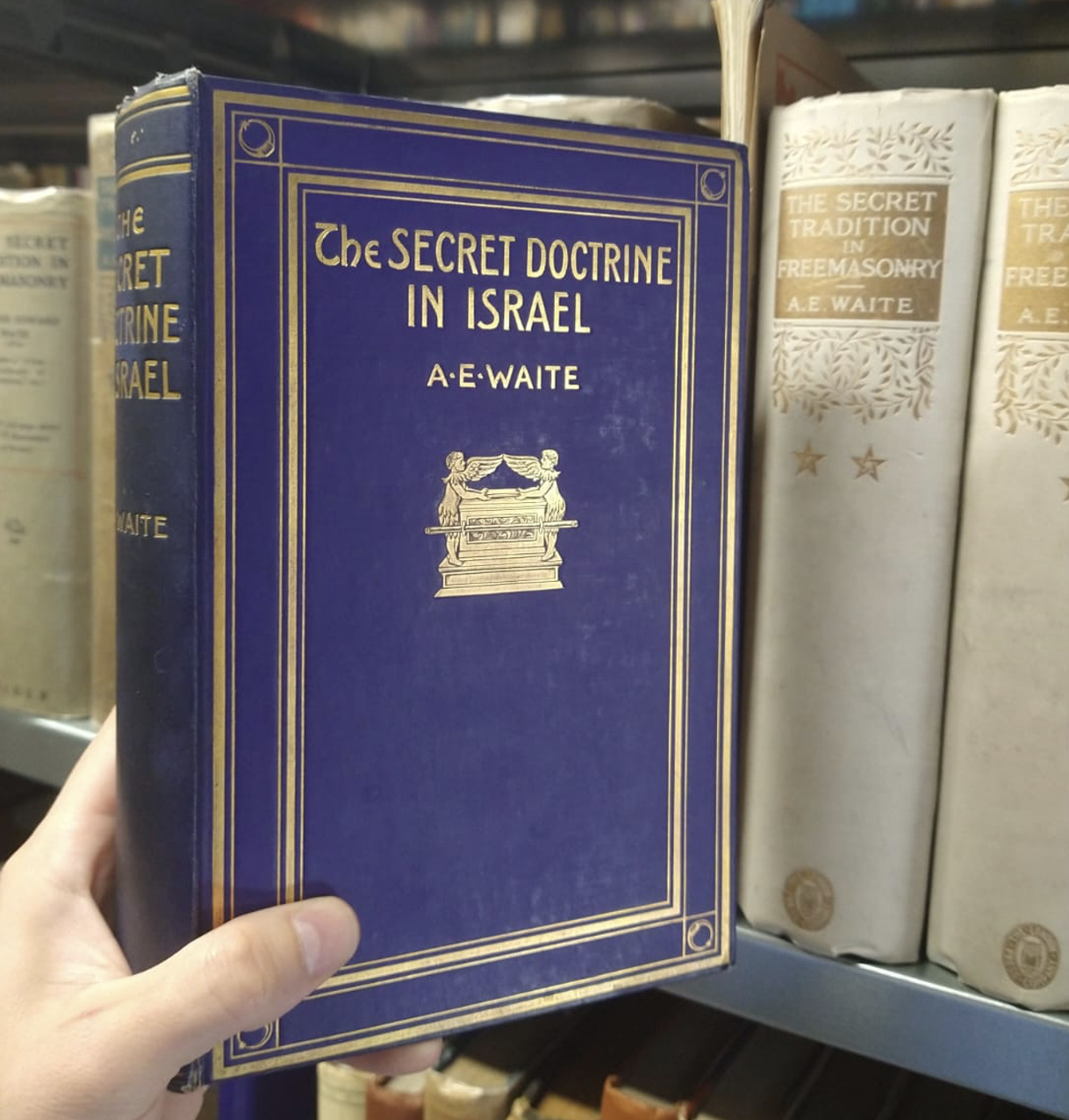
As mentioned, one of the topics which Waite devoted a great portion of his attention to was Freemasonry. For example, he wrote the vast two-volume The Secret Tradition in Freemasonry (1911). This enormous opus of Waite’s is an excellent case of Waite’s exhaustive, uncompromising devotion for fully exploring a tradition, and in a way which is still valued by many scholars. However, he also wrote concise texts as well – it is to this latter occasional impulse within Waite’s prolific writing oeuvre which concerns my Codex piece this month.
It should be mentioned as disclaimer that not every practicing Freemason will necessarily agree or align with Waite’s own interpretation of the tradition. Thus, what he sets forth in the pages which I’ll be quoting from should be considered one opinion among many on the matter!
In 1915, at 58 years of age, Waite published a very short treatise titled ‘Some Deeper Aspects of Masonic Symbolism.’ A short yet dense work divided into three parts and totaling just fifty-six pages, in this piece I will deal only with the first part, with the second and third parts to follow in the next August 2026 Codex. The work deals with the primary symbols which appear in the Freemasonic tradition – a tradition often defined by and associated with a phrase which also appears in Waite’s treatise: ‘Freemasonry is a peculiar system of morality, vailed in allegory and illustrated by symbols.’
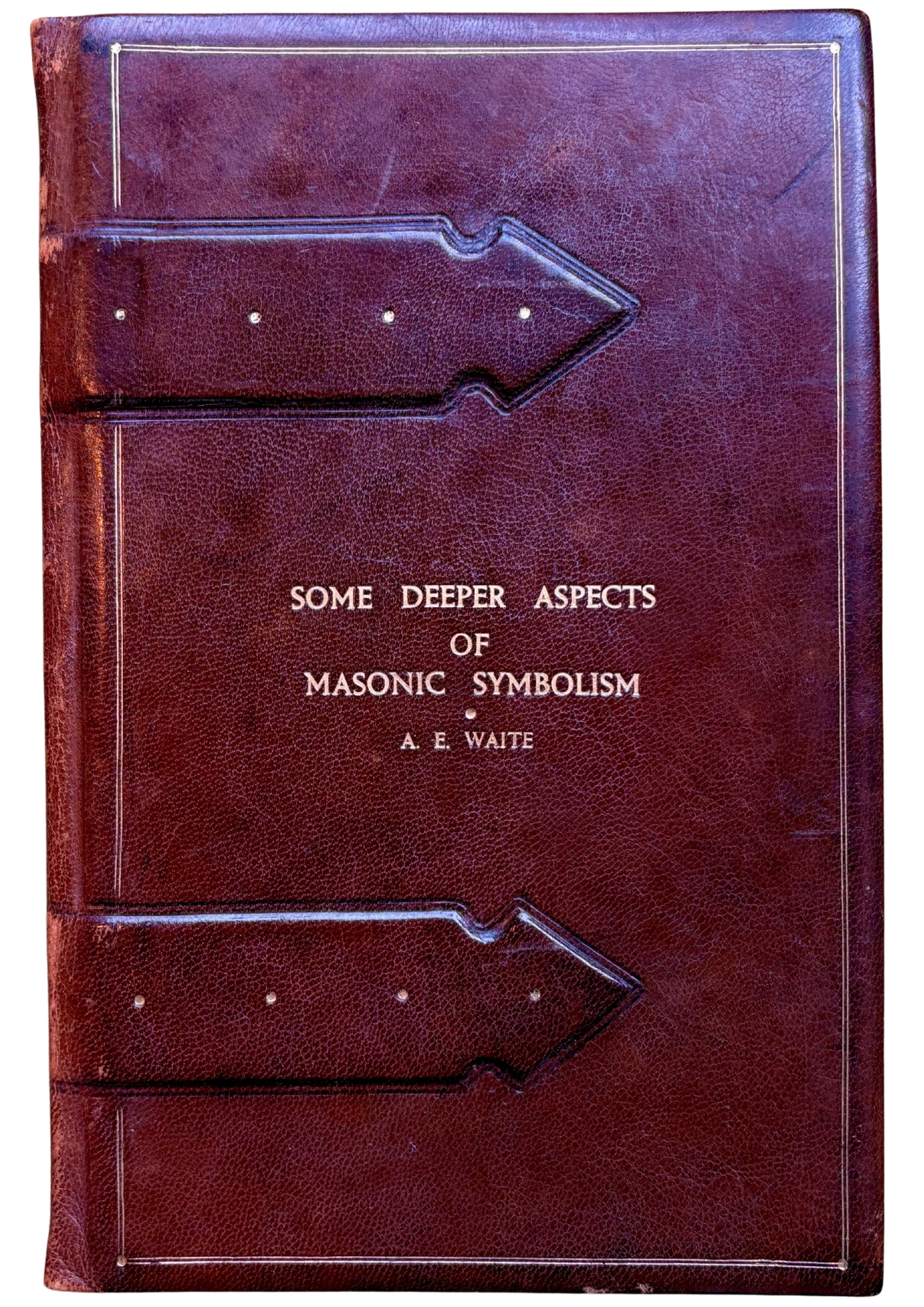
Based on Waite’s framing at the outset, the treatise seems to have been adapted for print from a lecture Waite gave at a Masonic symposium which also included attendance by ‘operative’ masons, or in other words, masons which were not merely working on their morality, but also constructing physical buildings. Practical or ‘operative’ masonry was in large part what the later modern mystery school of Freemasonry - also referred to as ‘speculative’ masonry - developed from. The construction principles used by operative masons were then applied to the individual mason’s moral system within the speculative Freemasonic tradition, Waite writes:
‘But as we are not all operative Masons, but rather Free and Accepted or speculative, we apply these tools to our morals.’ (p. 10)
And as he writes a bit further on, the goal for each mason is the “erection by the Candidate in his own personality of an edifice or ‘superstructure perfect in its parts and honorable to the builder’” (p.10)
A System of Morality
In the section specifically dedicated to morality, Waite walks the reader through the basic symbolism of Freemasonry’s three-fold degree system.
The first degree, known as ‘Entered Apprentice’ concerns (in Waite’s words), “the Candidate’s own work, wherein he is taught how he should build himself.” The second degree, known as ‘Fellowcraft’ involves the telling of “a building myth, and the manner in which it is put forward involves the Candidate taking part in a dramatic sense, wherein he represents the master-builder of Masonry.” This has to do with an enacted dramatic scene or ‘mystery play’. Finally, the third degree involved “a Masonic quest, connected with the notion of a Secret Word communicated as an essential part of the Master-Degree in building. This is perhaps the most important and strangest of the three elements; but the quest after the Word is not finished in the Third Degree.”
Waite then walks through each of the three degrees with some detail. Concerning the ‘Entered Apprentice’ degree, he writes that the candidate comes in as one who is “worthy and well recommended, as if he contained within himself certain elements or materials which are adaptable to a specific purpose.” (p. 12) It is important to note that each potential candidate must be at minimum “a deserving member of society at large”, but he must also be much more. In order for the candidate to progress, he must first learn “the meaning of the state of darkness, namely, that he has not yet received the light communicated in Masonry.” (p. 12) Together, the symbols and words typifying this stage of initiation must “constitute together an image of coming out from some old condition […] and thereafter of entering into a condition that is new and different […] and, ultimately, another life entered.” (ibidem.)
The Meaning of Initiation
In the following section Waite unpacks what the true meaning of masonic initiation holds for the candidate. In this section he illustrates nicely the symbolic mode of thinking the candidate begins to adopt. Firstly, the candidate starts to have his eyes opened into the perception of a new representation of the world, “for you must know, of course, that the Lodge itself is a symbol of the world, extending to the four corners, having the height of heaven above and the great depth beneath.” (p. 13) By adjusting to and eventually adopting this mode of awareness and perception, the newly initiated mason begins to “see things as they have never been presented to him before […, made possible by and] enriched by the secret knowledge of the Royal and Holy Art.”
Entered, Passed, Raised
Returning again to a brief definition of the effects and character of the three degrees, Waite writes how the Entered Apprentice degree involves a “new life which he is to lead henceforth”, the Fellowcraft is typified by a ‘renewed mind’ “for the prosecution of research into the hidden mysteries of nature, science, and art.” The final “sublime Degree of Master Mason” however, concerns the mason’s “may enter fully the mystery of death and of that which follows thereafter, being the great mystery of the Raising.” (p. 14) The three words associated with each of these transitions is thus ‘Entered, Passed, and Raised’, and their operative craft equivalent being ‘Apprentice, Craftsman, and Master’. Waite concludes the section with a nice addendum, writing how progressing through the three degrees, the mason “has learned how to effectuate in his own personality ‘a new birth in time,’ to wear a new body of desire, intention and purpose…” This is accomplished “in the midst of a very strange symbolism.”
Imperfect Symbolism
The final section of part one of Waite’s treatise concerns (albeit punctuated) masonic symbolism directly. He informs us that the system upon which Freemasonry is based, involves applying the metaphorical framework and moral precepts which are only glimpsed at obliquely in the symbols to the individual candidate’s consciousness and entire being: “the candidate is instructed to build upon his own part a superstructure which is somehow himself.” This form of spiritual pedagogy is of course not unique to Freemasonry – it is merely one particular mode of instructing one to adopt a metaphorical & symbolic awareness that can also be gleaned from various other sources.
Here, Waite also has a slight critique of the tradition, aiming at the Fellowcraft degree specifically: “this symbolism is lost completely in the ceremony of the Fellowcraft Degree, which, roughly speaking, is something of a Degree of Life; the symbols being more especially those of conduct and purpose, while in the Third Degree, they speak of direct relations between man and his Creator, giving intimation of judgment to come.”
The Third Degree & Conclusion
The final ‘Master Degree’ concerns, unsurprisingly, the motif that is central to all rites of passage rituals the world over, namely, “death and resurrection.” At the heart of its masonic form, this concerns a peculiar legend, namely that of the Temple of Solomon. Therein the mason is told and enacts the legend of the Master-Builder Hiram Abiff, who suffered martyrdom “rather than betray the mysteries which had been placed in his keeping.” (p.16) One of the primary features communicated to the mason throughout the ritual is the importance of keeping the “secrets of the Masonic Order secretly.” As the Master Builder suffered a brutal murder in the legend, so too the candidate enacts this gruesome scene, but thereafter is risen. This gives the final degree the contours of its essence: “It is one of raising and of reunion with companions – almost as if he had been released from earthly life and had entered into the true Land of the Living.” The ‘keynote’ therefore, is not one of dying, but one of resurrection. This is another case in Waite’s text in which the ‘deeper’ aspects are commented on, for he points out that this resurrection motif: “yet it is not said in the legend that the Master rose. The point seems to me one of considerable importance, and yet I know not of a single place in our literature wherein it has received consideration.” This is actually quite mysterious indeed – where could this motif have originated? I already pointed out that death and rebirth is the fundamental center of rites of passage rituals, and of course is of central theological import within Christianity, but also of the Egyptian myth of the resurrection of Osiris via his son Horus who plays the part of messianic figure in that narrative. Waite puzzled over its direct reference within Freemasonry and also stated he intended to return to it.
Next, we will unpack Waite’s exploration of the following topics:
The Book of the Dead
The Christian Mysteries
The Mystical Fact
The Place of Darkness
Operative Masonry
The Old Charges
Living Stones
If space permits, we will also cover the topics of the third part of Some Deeper Aspects, including
The Kabalah
The Divine Name
The Temple
The Builder
Having covered the first part, where Waite introduces the reader to the basic symbolism of the three initiatory degrees of Freemasonry: Apprentice, Fellowcraft, and Master Mason, we now look at parts two and three, where he delves deeper into some of the lesser-known aspects of Masonic symbolism, and is quite economic in doing so given the entire treatise is just thirty-six pages.
The first main theme he addresses is that of ‘Raising’, by this he refers to a major archetypal pattern which can be encountered in a great number of traditions:
The Instituted Mysteries of all ages and countries were concerned in the figuration, by means of ritual and symbolism, of New Birth, a new life, a mystic death, and resurrection, as so many successive experiences through which the Candidate passed on the way of his inward progress from earthly to spiritual life, or from darkness to light. (p. 17)
I mentioned it previously in another Codex issue, but the theme of death and rebirth is the primary feature of rites of passage the world over, and to be sure is at least partly derivative of the ancient mystery schools such as those which took place at Eleusis in the ancient Greek world. Waite mentions the Eleusinian mysteries but also the Egyptian myth of Osiris, who died and later rose. In the following section concerning ‘The Christian Mysteries’, he explains that the way in which Christianity transmits this primordial motif is the most important, and in particular from the esoteric strain within it:
…all religions have testified to the necessity of regeneration and have administered its imputed processes. That which is most important – from my point of view – is the testimony belonging to Christian times and the secret tradition therein. (p. 18)
It is important to note, as Waite does, that discussing religion within a ‘Craft Lodge’ (a Masonic lodge) is technically forbidden. However, this is only true when religion is “presented from a religious or doctrinal angle.” Instead, Waite treats the topic of transformation as presented within a religious context “as a sequence of symbolism in the form of dramatic mystery […] from a philosophical point of view only.” This allows Masons to circumvent the rule against discussing religion within the lodge. This is also a necessary ‘loophole’ as it were, because the sequence of transformation cycles presented within religions “are regarded as delineating momentous experiences in the history and life of man’s soul”, and thus are of high import to transmit within the mystery school that is Freemasonry.
Cosmic Correspondences
In my reading of this sort of material, perhaps the singular most common impulse of esotericists is to point out ‘correspondences’ or parallels and patterns which can be discerned across traditions. Waite follows suit by pointing out parallels between the life and story of Christ and earlier cycles present in previous mystery religions, pointing out a deeper archetypal progression at work:
1. “[Christ’s] hidden life in Egypt and Nazareth corresponds to the life of seclusion led by the mystae during their period of probation between the Lesser and Greater Mysteries.”
2. “The three years of [Christ’s] ministry are in analogy with the Temple-functions of the mystagogues.”
3. “In Egypt and elsewhere, there was the mystic experience of the Pastos [a small shrine or chapel in which God was contained], in which the initiate died symbolically, as Jesus died upon the Cross.”
The initiate in earlier pagan mysteries, just like Christ later, then “rose from the Pastos in the imputed glory of an inward illumination.” Waite understands this transmission as a mythic sequence which boils down to one symbolically “rising from the dead.”
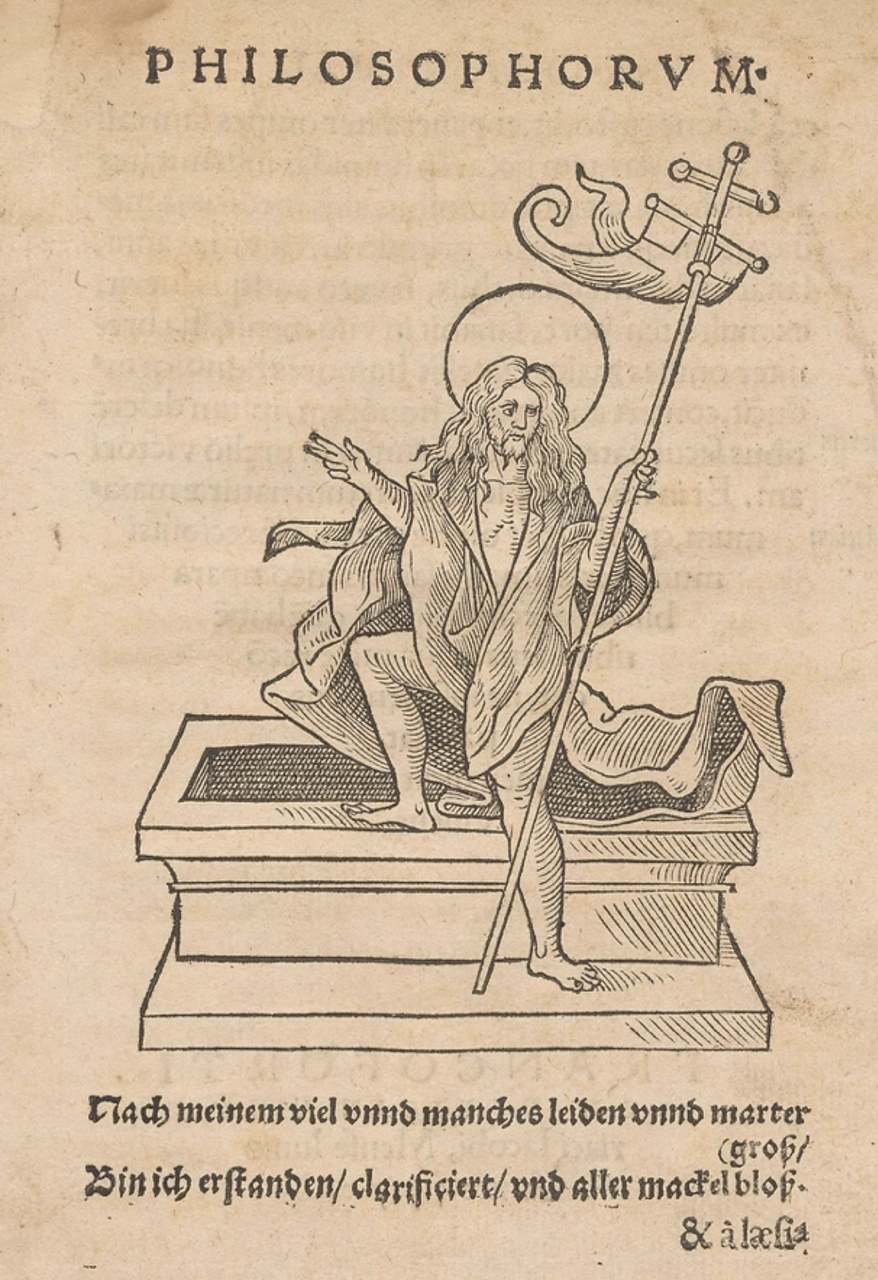
Putting a button on the topic, Waite reminds us that the sequence of mystic birth, life, death, and resurrection is “a particular formula which is illustrated frequently in the mystic literature of the Western world.” Waite sees the same pattern emerging in Western alchemical literature which “bore witness to this symbolism and to something real in experience which lay behind it.” Waite was well read in the alchemical corpus, for motifs of death and rebirth do indeed abound within it. For example, there is an excellent example for this discussion found in a woodcut in the alchemical work Rosarium Philosophorum (1550) which depicts the resurrected Christ emerging from the tomb where he is associated with the Philosopher’s Stone and the final stage of the alchemical process.
A New Mode of Consciousness
Waite understands these things - as he asserts Freemasonry understands them - as the evolution of a certain mode of spiritual perception:
…that which is formulated as mystic birth is comparable to a dawn of spiritual consciousness […] it is the turning of the whole life-motive in the divine direction, so that, at a given time – which is actually the point of turning – the personality stands symbolically between the East and the North, between the greatest zone of darkness and that zone which is the source of light, looking towards the light-source and realizing that the whole nature has to be renewed therein.
The ’inward-turning’ is perhaps the most important element to emphasize here, as this is the new orientation that is given/imposed/inherited on behalf of the initiate. This can be understood in other words as the ‘descent from spirit into matter, and the ascent from matter back to spirit’ – a mainstay leitmotif in mystic literature distilled by Waite beautifully as “Mystic life is a quest of divine knowledge in a world that is within.”
One of the central problems with conveying these ideas and principles is the limitation of language. This ‘problem’ was identified by American philosopher of religion William James in his classic The Varieties of Religious Experience (1902) - a wonderful, enlightening adventure of a book written contemporaneously with many of Waite’s! Coming in at the top of the list as the very first of four features by which one can characterize a ‘religious experience’ is the notion of ‘ineffability’. As James writes,
The subject of it immediately says that it defies expression, that no adequate report of its contents can be given in words. It follows from this that its quality must be directly experienced; it cannot be imparted or transferred to others. In this peculiarity, mystical states are more like states of feeling than like states of intellect. (Varieties, p. 295.)
In relation to Freemasonry specifically, Waite piggy-backs James’ point by echoing that “In this state, by the testimony of many literatures, there supervenes an experience which is described in a thousand ways yet remains ineffable.” (Some Deeper Aspects, p. 21).
In my view, this is why within Freemasonry the role of symbolism and ritual are so enormously paramount. These allow the perceiving initiate to approach what the German comparativist theologian Rudolf Otto (1869-1937) called the ‘mysterium tremendum’ obliquely, since it cannot be approached directly. This ‘great mystery’ which is simultaneously ‘terrifying’ (tremendum) and ‘fascinating’ (fascinans) is also understood by Otto as a ‘numinous’ experience, i.e., that which arouses "spiritual or religious emotion; mysterious or awe-inspiring"; also "supernatural" or "appealing to the aesthetic sensibility." (Das Heilige / The Idea of the Holy, 1917).
From Operative to Speculative
Returning to Waite, in a section concerning ‘Operative Masonry’, he (surprisingly to me) sees the influence of operative masonry (stonemasonry) on speculative Freemasonry as being quite minimal. Moreover, to the degree that it did influence speculative Freemasonry, many of the operative ‘stonemasonic’ principles “were at work unconsciously within the limits of Operative Masonry.” This has to do, in Waite’s opinion, not so much with some mysterious secret, but more with the way in which the person of the Middle Ages saw the world in general:
At a period when there was a tendency to symbolize everything roughly, so that it might receive a tincture of religion – I speak of the Middle Ages – the duty of Apprentice to Master, and of Master to Pupil, had analogies with relations subsisting between man and God, and they were not lost sight of in those old Operative documents. (p. 22)
And further,
These facts notwithstanding, my position is that the traces of symbolism which may in a sense be inherent in Operative Masonry did not produce, by a natural development, the Speculative Art and Craft, though they helped undoubtedly to make a possible and partially prepared field for the great adventure and experiment. (ibid.)
Part three of Some Deeper Aspects is quite short, so we will briefly summarize the most important ideas conveyed within it. It begins with an intriguing discussion of the myth which lie at the center of the Master Mason degree ritual, namely the legend of the architect of Solomon’s Temple, Hiram Abiff, who to protect a secret of the ‘Master-Word’, died at the hands of bandits. Due to the myth being of Jewish origins, Waite then expands on the role of the Jewish mystical tradition of Kabbalah. He does not go into depth, but merely mentions the history and problem of the ‘Lost Word’ idea, and a few Kabbalistic texts which he points to as being the primary sources upon which the Masonic tradition drew its influence, namely, the Zohar, The Garden of Pomegranates, and The Gates of Light.
Beyond the scene in the story of the architect where Hiram Abiff refuses to provide the secret word to his assailants, Waite sees the idea of the ‘Lost Word’ truly being related to the four-fold Hebrew name of God, the so-called ‘Tetragrammaton’, the proper pronunciation of which is said to have been lost in remote antiquity. Thus, substitutes for it emerged over time such as Adonai, Jehovah, Yahwe, et cetera. Waite refers repeatedly to Kabbalah as ‘The Secret Tradition of Israel’ a term which he used for the title of a book he wrote two years after Some Deeper Aspects.
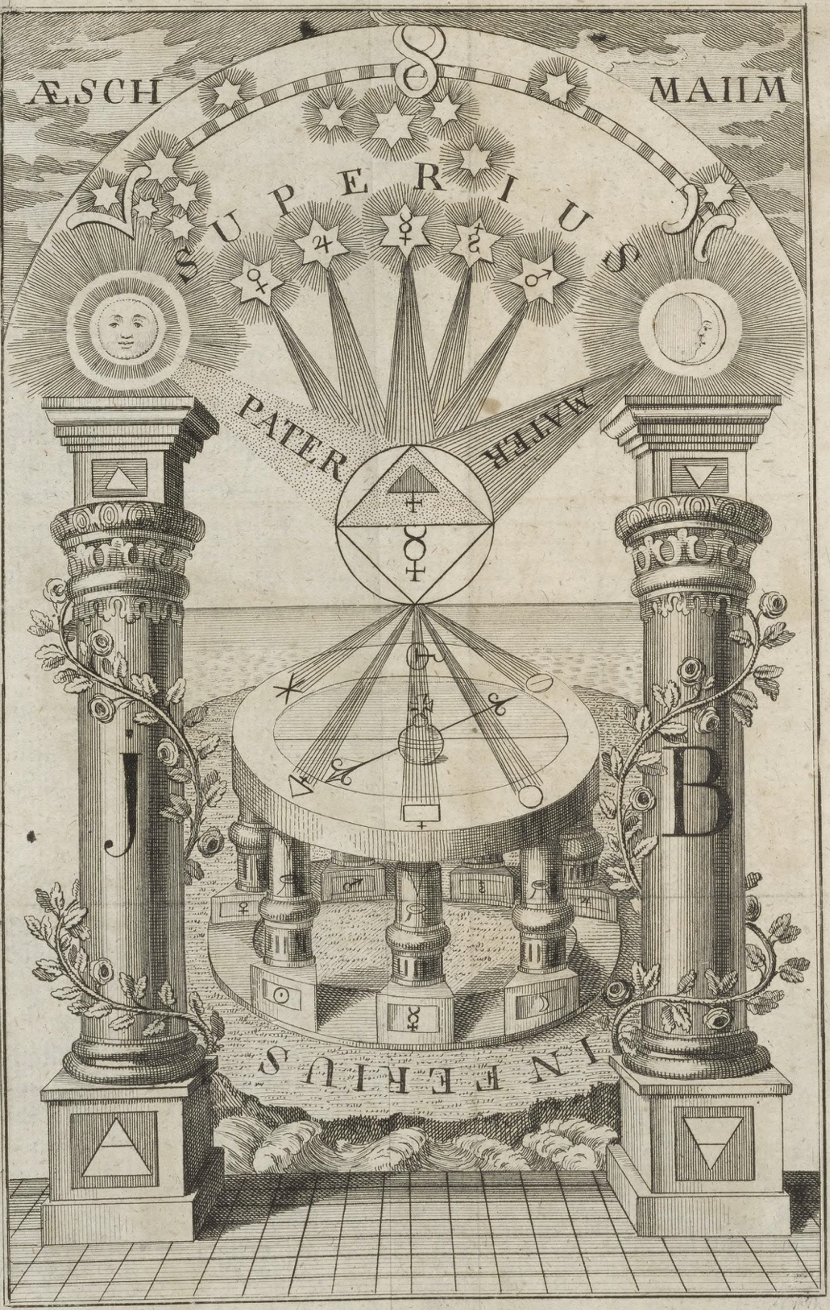
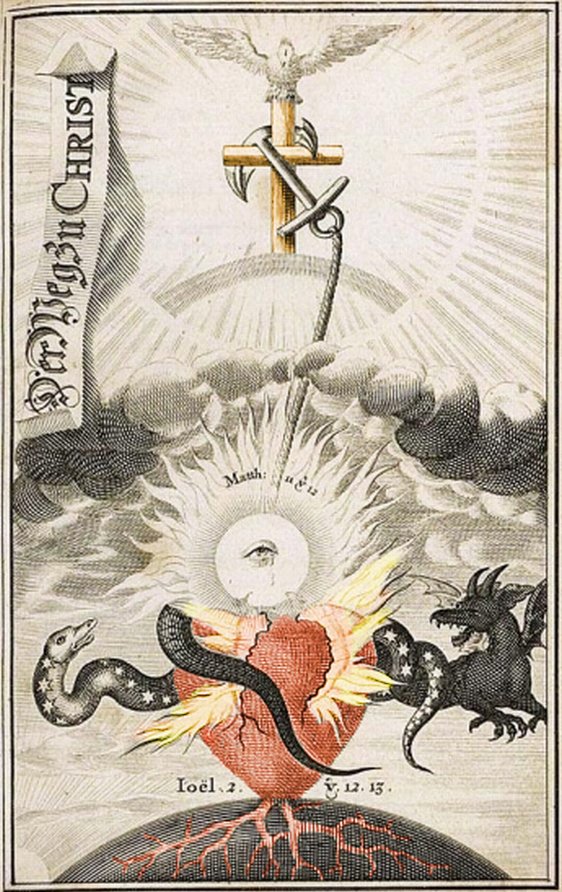
Within Kabbalah, (a term meaning ‘reception’) Waite expands on the importance of the two pillars said to be encountered at the entrance to Solomon’s temple. The pillars are called Joachim and Boaz, and symbolize the regularly occurring ‘opposing opposites’ motif and feature regularly in Western esoteric iconography, beautifully illustrated in an image which appeared in Der Compaß der Weisen (1782).
Conclusion
This quest for the ‘true meaning’ of the Lost Word is the quest every Freemason takes upon himself “in the ceremony of the Third Degree” by assuming the role of the ‘Master Builder’ in the dramatic re-enactment of the tragedy of Hiram Abiff. By doing so, each mason is meant to progress on their Masonic journey by constructing within himself “a superstructure perfect in its parts and honorable to the builder.” Thus, in essence, with many parallel examples we could list ad nauseum, as Waite sees it in Some Deeper Aspects, the Masonic quest allows one to at least approach the act of redeeming that which was lost in the Fall; of approaching the Divine, or in Waite’s words:
Freemasonry, in its proper understanding, is a summary of the quest after that which is Divine, and it is followed in the universe by that which is Divine in man; alternatively it is the manifestation of that which is Divine in the universe to that which is Divine in man. This quest is embodied in allegory, in ritual, in legend, and in symbolism.
Thank you for reading. If you would like to read this book, it is digitized! Click this link to have a look yourself!
Written by
Corey Andrews
Corey Andrews is a PhD candidate at the University of Amsterdam and a researcher working for the Ritman Research Institute. His research focuses primarily on 17th and 18th century Rosicrucianism and the life and works of Jan Amos Comenius (1592-1670).

.avif)