


.svg)
Hildegard von Bingen and the Path to Source Through Embodied Beauty
By
Maria Marqués
September 17, 2026
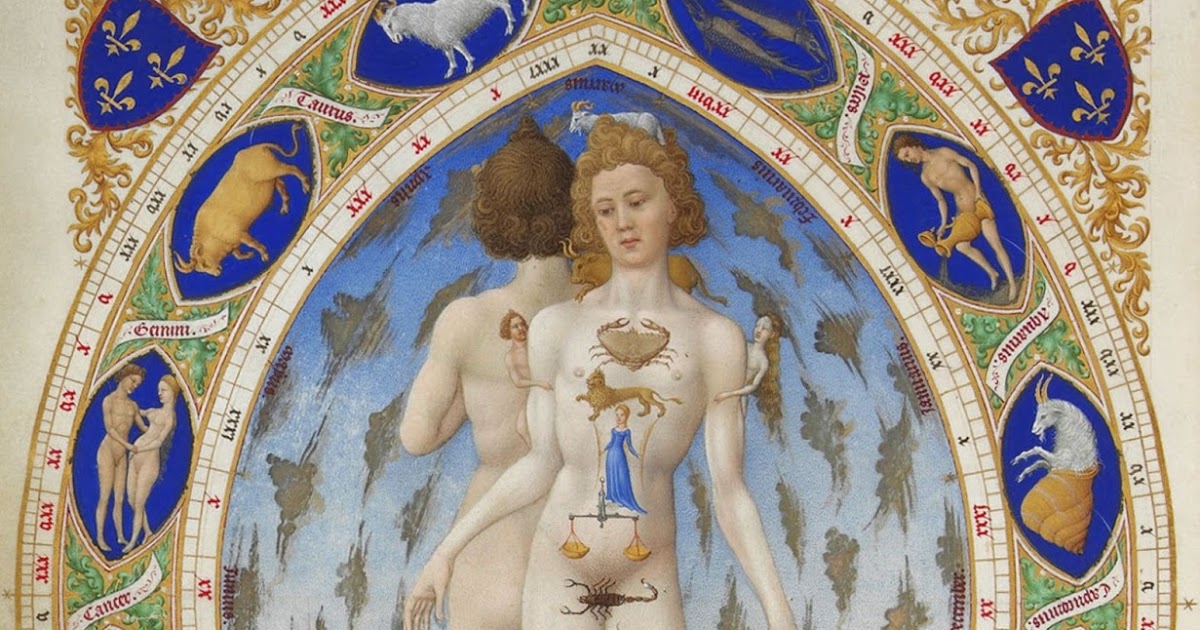
A human figure encircled by the cosmos, from Hildegard von Bingen's Scivias.

Hildegard von Bingen and the Path to Source Through Embodied Beauty
A human figure encircled by the cosmos, from Hildegard von Bingen's Scivias.

Hildegard von Bingen and the Path to Source Through Embodied Beauty
By
Maria Marqués
September 17, 2026
September 17th marks the feast day of Hildegard von Bingen (1098–1179) – Benedictine abbess, composer, visionary, and one of the most venerated mystics of the Christian West. One of only four women ever proclaimed a Doctor of the Church, she stands as a living beacon for many, illuminating the dynamic relationship to God from a woman’s point of view.
Each year, her special day seems to fittingly arrive at the height of a month of transition, where the fertile life of our surroundings makes its final hurried hurrah prior to the equinoctial shift into Autumn. Her resonance as a symbol for the living connection between God, humanity, and the natural world makes it an especially unique moment to reflect on her legacy, particularly as it pertains to the embodiment of beauty in relation to the metaphysical realm.
Through her channellings in the form of liturgical compositions and her prolific position as a well-known Christian mystic in Western history, Hildegard von Bingen is for many an emblem of the transcendentality of beauty. As the popular figure she came to be, particularly posthumously, her contributions to Christian narratives have been tremendously influential to the point that she is considered the “best known woman of the Middle Ages, and possibly even the most important one” (Embach, A History of Reception, 2014: 273). The recordings of her 26 visions appeared in the 12th century Scivias (a title adapted from the Latin phrase Sci vias Domini, i.e., ‘Know the Ways of the Lord’). Therein she claimed them to be “True Visions Flowing From God” (p. 59), which represent exceptional modes of understanding the principles and teachings of the Bible as offered through mystic channelling. As is shown in the Scivias, the expressed connectivity of envisioning reflects an existential essence to the beauty undergone in the act of rejoicing in God's messages. In all of her creations, prosperity and light are permanent symbols of holiness, and provoke a positive intensity that awakens a connection with higher meanings.

Where philosophy has long treated beauty as an abstraction to be reasoned toward, Hildegard offers something rarer: a lived demonstration of beauty as a vehicle of connection to source. Through her renowned visions, liturgical music, and advocacy for divine wisdom as a forceful, feminine current within the soul, and through her own unconventional governance as abbess of Rupertsberg and Eibingen, Hildegard stands as a breathing representation of a metaphysical engagement with beauty of heavenly origins: one enacted not through ascent alone, but through the body, the voice, and the deliberate cultivation of the self as a site of divine radiance.
In Neoplatonic frames, beauty is realised as an interrelation between source and its derivations – the material thing becomes beautiful by communicating in thought what flows from the divine, attained through a withdrawal into the self until the godlike splendour of virtue shines through. But where Neoplatonism leaves beauty largely a doctrine of ascent, Hildegard makes it flesh: her visions, music, and the deliberate adorning of the body itself become the means by which one’s inner divinity can shine, beauty channelled through the body rather than reached by leaving it behind. In this sense Hildegard’s engagement with beauty is, in her own terms, a very physical one: the higher realm is not ascended toward, but brought down, or translated into, the physical plane.

In her Symphony of the Harmony of Celestial Revelations (c. 12th century), Hildegard communicates a description of heavenly agents and their order, informing an illuminated sense of praise over the seeming perfection of Heaven. In the first of many poetic writings, she speaks to Mary so to indicate the importance of her exemplar formulation and creation by God:
“O splendid jewel, serenely infused with the Sun! The Sun is in you as a fount from the heart of the Father; It is his sole Word, by Whom He created the world, the primary matter, which Eve threw into disorder. […] And therefore you are the jewel that shines most brightly” (Book 3, Vision Thirteen, 1).
The abundance of splendour emphasized by Hildegard’s allusions to shining and light reflects a distinct relationship to the graceful wearing of virtue and beauty, for her words provide a more vivid expression of the sensational and captivating feeling of being in an ascended state. Her antagonization of disorder as having been created by Eve, contrasted with the magnificent presence of created beauty which shines, reinforces her fidelity to a specified form of virtue as void of misarrangement and chaos as corruption.
Hildegard’s clear praise for divinely-sourced wisdom and femininity reveals a deep-rooted conviction – both in expressing and physically incarnating a metaphysical engagement with beauty, and in offering a distinct alternative to more abstract, doctrinal means of expression around the topic. Her eloquent appreciation for holy Mary at the start of Vision Thirteen, through metaphorizations and remarks of her ways of shining, valuably raises this figure. This supports the vision of a connected appraisal of beauty as part of creation and an interaction of the feminine principle with source, thus realising beauty by binding metaphysical notions with the resonance of the text. In her advocacy for divine wisdom (or Sapientia) and specific focus on the forceful role of the feminine in and through internal divine strength and self-knowledge, Hildegard represents a practical engagement with beauty and God – both as a visionary but also as a writer, teacher and composer who by informing people of her receptions would inspire them to tap into the empowerment brought on by said connection. The salience of her practicality owes itself further to her special emphasis on the physical body as a medium for this.
Observing Hildegard through a more biographical appreciation of her influence, it is easy to identify the peculiarity and wisdom of her then-considered unconventional ways of stimulating engagements with beauty through disciplined empowerment and emotionally-heightened grounded-ness. It is said that throughout her time as a leader of nuns both in Rupertsberg and Eibingen, “Hildegard created communities of women who had the rare opportunities to develop intellectual, artistic, and spiritual gifts under her leadership” through different means ranging from creative workshop activities, a healthy schedule and eating routine, indulging in natural remedies and occasional beer drinking (Fierro, Vision of the Feminine, 1994: 19). In addition, Fierro (1994: 19) details on how, during holy days, women would wear “fancy clothing” and jewellery on their bodies, an idiosyncrasy that was met with much criticism for its un-traditionality but which Hildegard defended as their right to express “Divine beauty” just as “the monastic virgin had a right to adorn herself […] out of love for the heavenly bridegroom.” The freedom given to the nuns under her vigilance and her endorsement of celebrating the feminine through self-expression reveals Hildegard’s lenience towards less restricted and more welcoming forms of practicing spiritual empowerment.
The experience of a metaphysical engagement with beauty is, in Hildegard’s terms, indeed a very physical one. There is an inherent centrality to the body’s workings and its ability to curatively align a human being, in beauty, with divinity through different means, a principle easily extendible even to Hildegard’s disciplinary constructions around health, natural remedies and a suitable and stimulating routine (Fierro, 1994). As mentioned before, the adorning of the body, too, is discussed as being tied to the embodied practice of metaphysically engaging with beauty, as “for Hildegard the body seemed more like a sensitive and poetic expression of the soul. As such it could be decorated, beautified and finely clothed to reflect the radiance of the inner spirit” (Fierro, 1994: 19). Thus the body as a site of expressivity represents the ability for a metaphysical engagement with beauty to be channelled through it, whereby one’s inner divinity shines through by allowing beauty to take its place.

Hildegard’s music is imbued with a transcendental beauty that can be understood as sourced from metaphysical agents. As discussed by Heinzer (2014: 99), the exceptionality of her creations is defined by “the supernatural qualities of the melodies that Hildegard hears and retains in her visions: melodies of heavenly origins, and therefore of a beauty that exceeds human musical competence”. Hildegard’s music demarcates how she makes information or sounds sourced from the ethereal realm available to listeners, representing the chance of engaging with beauty metaphysically through the integration of melodies in a way that transcends the supposed distance between the human and the beautiful as achieved through ascent. As discussed by Fassler and Newman (Voice of the Living Light, 1998) both about her music and poetry, aside from what seems like an innate capacity for connection, the intricacies of the conventions of Hildegard’s artistic, aesthetic and phonetic compositions are known to be effective means of communicating with source. Differently from a metaphysical engagement with beauty which involves the self’s atonement for the sake of connecting with the higher realm, Hildegard’s music reflects a mode of engagement with beauty in which the higher realm is somewhat brought down, or translated into, the physical plane. Although the gift of Hildegard’s talents is rare, this version of engaging with beauty (with due credit to Hildegard’s mystical connection to God) shows how the individual is also capable of making the One and its beauty available to others.
From a theological perspective, understandings of beauty in connection to the divine can be successful under the exercise of autonomy and the choice to remain distinct, by nature, from the collective. This is further emphasized by the extensive resonance of Hildegard’s influence beyond the realm of Christian thought, traced onto New Age musicians, contemporary art and numerous cultural groups (Baird, 2006: 14; Mews, 2004). We thus may become readily able to extract the essence of internally-incurred connections to the divine as a work of personal journeying through one’s inherent interconnection to source and the beauty that is realised, or fulfilled, along the way. As the Church marks her feast day this September, Hildegard’s testimony endures among the living currents of wisdom the BPH continues to preserve: an invitation not merely to read of her vision, but to embody it.
References
1. Baird, J. L. (2006). The Personal Correspondence of Hildegard of Bingen. Oxford: Oxford University Press.
2. Embach, M. (2014). Hildegard of Bingen (1098–1179): A History of Reception. In B. M. Kienzle, D. L. Stoudt, and G. Ferzoco (Eds.), A Companion to Hildegard of Bingen. Leiden: Koninklijke Brill NV.
3. Fassler, M. (1998). Composer and Dramatist: "Melodious Singing and the Freshness of Remorse". In B. Newman (Ed.), Voice of the Living Light: Hildegard of Bingen and Her World. Berkeley: University of California Press.
4. Fierro, N. (1994). Hildegard of Bingen: And Her Vision of the Feminine. Kansas City: Carondelet Productions.
5. Heinzer, F. (2014). Unequal Twins: Visionary Attitude and Monastic Culture in Elisabeth of Schönau and Hildegard of Bingen. In B. M. Kienzle, D. L. Stoudt, and G. Ferzoco (Eds.), A Companion to Hildegard of Bingen. Leiden: Koninklijke Brill NV.
6. Kienzle, B. M., and Stoudt, D. L. (2014). Introduction. In B. M. Kienzle, D. L. Stoudt, and G. Ferzoco (Eds.), A Companion to Hildegard of Bingen. Leiden: Koninklijke Brill NV.
7. Mark, J. J. (2019). Hildegard of Bingen. Retrieved January 4, 2021, from https://www.ancient.eu/Hildegard_of_Bingen/
8. Mews, C. J. (2004). Encountering Hildegard: Between Apocalypse and the New Age. In L. D'Arsens and J. Feros Ruys (Eds.), Maistresse of My Wit: Medieval Women, Modern Scholars, Making the Middle Ages, 7. Turnhout: Brepols Publishers.
9. Newman, B. (Ed.). (1998). Voice of the Living Light: Hildegard of Bingen and Her World. Berkeley: University of California Press.
10. Saint Hildegard, trans. C. Hart and J. Bishop. (1990). Hildegard of Bingen: Scivias. New York: Paulist Press.
%20(2).jpg)
Written by
Maria Marqués
Maria leads partnerships and venue rentals at the EFM in Amsterdam. Grounded in sociology and theology studies, her endeavors explore esoteric culture in contemporary paradigms. Her interests lie in mysticism, the return to seasonal living, and astrology.


.avif)