
.svg)
Bubbling Brews and Melted Metals: The Work and Legacy of Maria the Jewess
By
Kyra Gerber
August 15, 2026
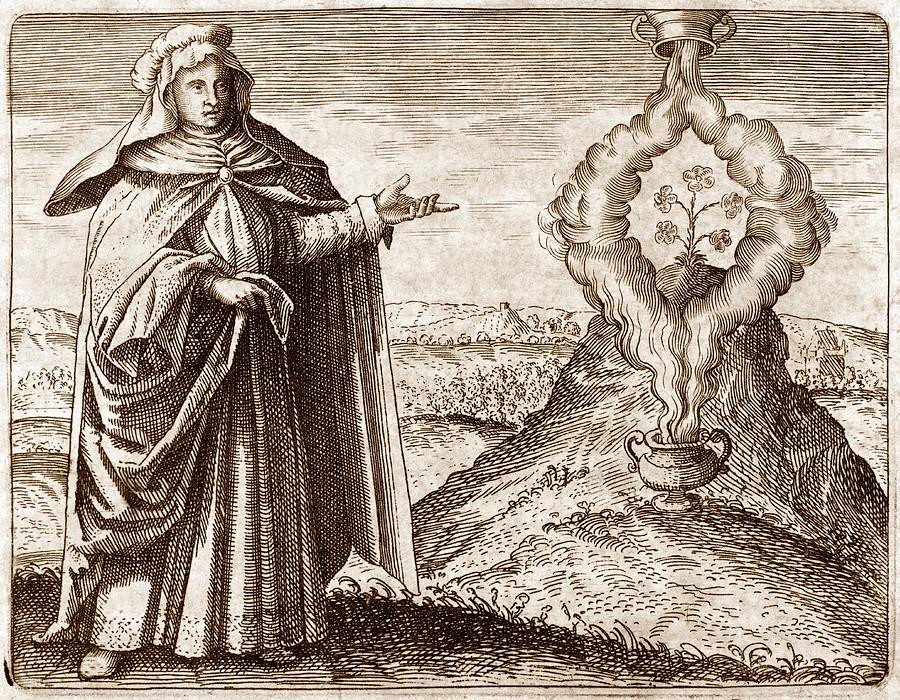
Mary the Jewess (Maria Prophetissima) from Michael Maier's Symbola Aureae Mensae, 1617

Bubbling Brews and Melted Metals: The Work and Legacy of Maria the Jewess
Mary the Jewess (Maria Prophetissima) from Michael Maier's Symbola Aureae Mensae, 1617

Bubbling Brews and Melted Metals: The Work and Legacy of Maria the Jewess
By
Kyra Gerber
August 15, 2026
Have you ever melted chocolate in a hot water bath? If yes, then you might have accidentally used ancient alchemical techniques.
Au bain-marie, literally “in the bath of Marie”, is a popular method in the kitchen that refers to melting or heating ingredients in a separate bowl above a pan of boiling water. The technique was already used in ancient Egypt and was (eventually even wrongly) attributed to the alchemist Maria (anglicised Mary) the Jewess, who lived in Alexandria sometime between the 1st and early 3rd century CE. Maria can easily be counted among the most influential alchemists in history, as she remained an authority for many medieval and later alchemists alike and made major innovations in alchemical processes and apparatus design. Moreover, she is the first non-mythical Jewish woman in history to write and publish work under her own name.
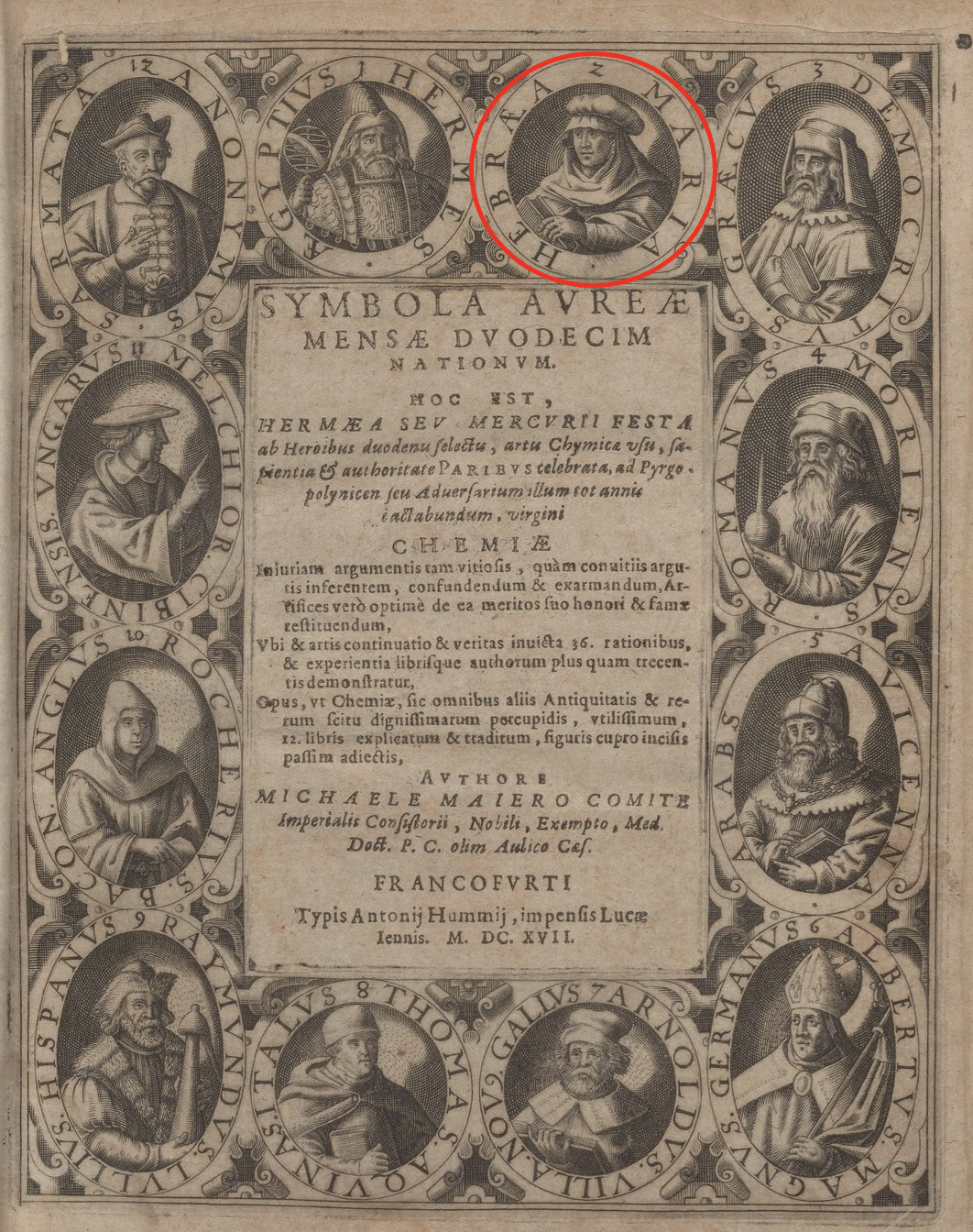
A direct proof of the high esteem she holds within alchemical circles is Maria’s feature on the frontispiece of Symbola aureae mensae duodecim nationum (“The Symbols of the Golden Table of the Twelve Nations”, Frankfurt, 1617). This alchemical compendium, written by the German physician Michael Maier (Rendsburg 1568 - Magdeburg, 1622), introduces twelve great alchemists from different nations. Maria is referred to as “Maria Hebreae”, thus Maria the Jewess, who is the representative of the “Jewish nation”. In the same book, at a later place, Maier devotes an elaborate chapter to Maria, which includes a full-body portrayal of her pointing towards a mountain with a flower on top, framed by two vessels that release fumes surrounding the plant.
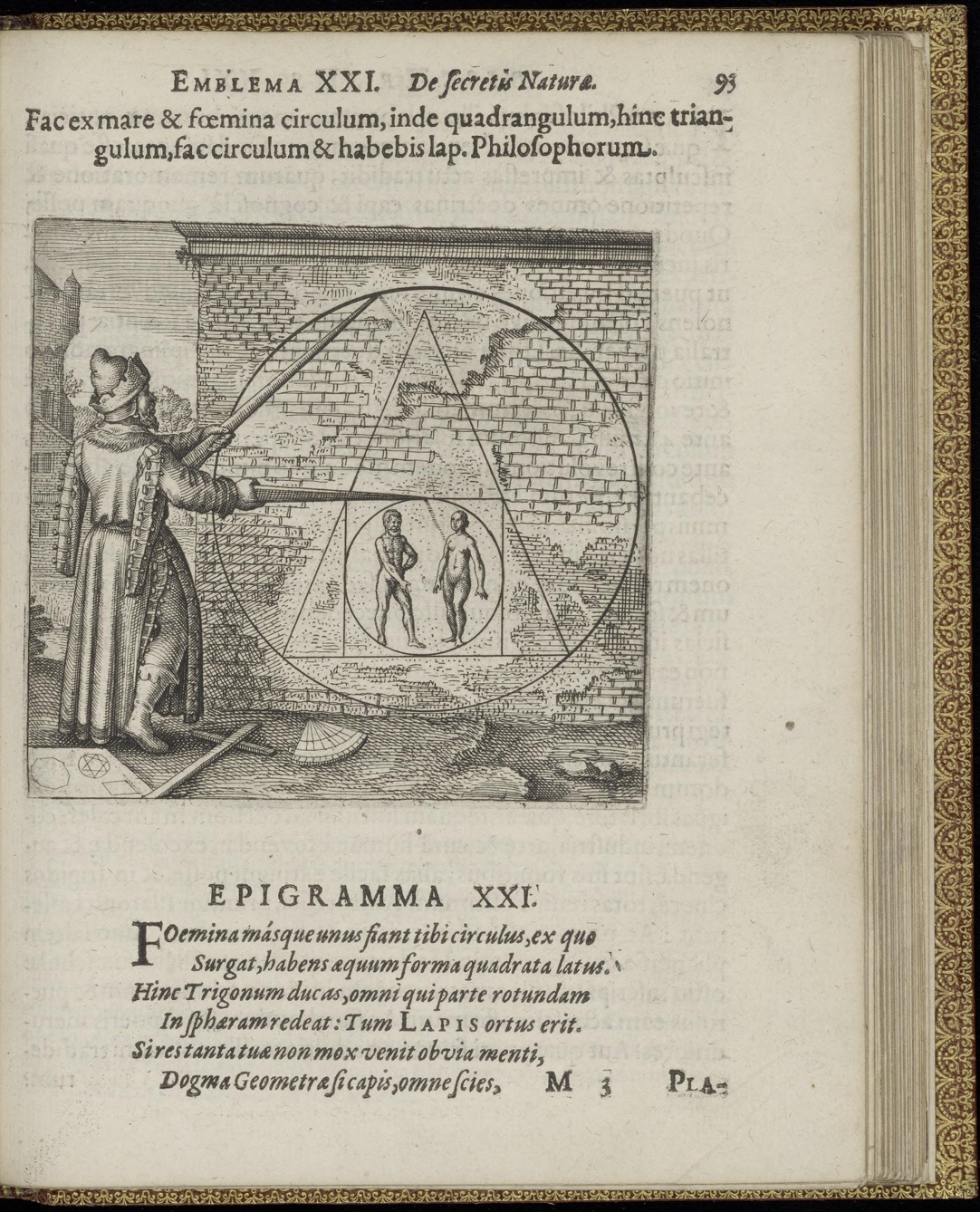
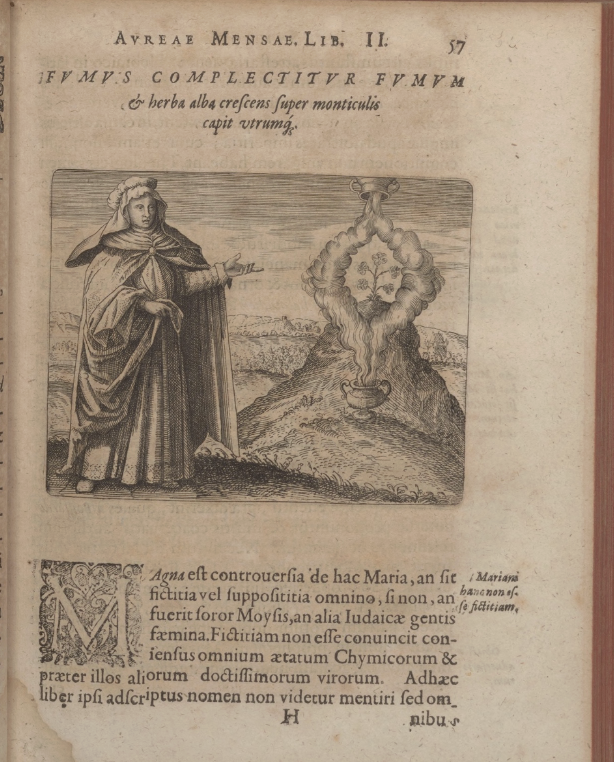
Maria was especially known for her experiments on the transmutation of metals and the synthesisation process of gold(-like material). The alchemical philosopher ‘Christianos’ (late 6th – 8th cent. CE) not only quoted but also summarized her view on transmutation and alchemical reactions in an ecstatic manner: “One becomes two, two becomes three, and by means of the third and fourth achieves unity. Thus, two are but one,” a saying now known as the 'Axiom of Maria'. In essence, Maria referred to the concept that all materials are one, a common idea in Alexandrian alchemy. The motif of the numbers 2, 3, and 4 and their ultimate unification can be found in many other alchemical works, including a later engraving by Michael Maier in Atalanta Fugiens (1618).
Written by
Kyra Gerber
Kyra Gerber is a PhD candidate at the University of Amsterdam and a researcher working for the Ritman Research Institute. Her research primarily concerns the Jewish mysticism of Kabbalah, Hebrew language prints, and 19th century Jewish intellectual history.

.avif)