

.svg)
.svg)
In A? Beginning – The First Book of the Hebrew Bible and Curious Ancient Jewish Rebel Coins
By
Kyra Gerber
May 15, 2026
Source: https://armstronginstitute.org/1261-rare-year-four-revolt-coin-discovered-in-jerusalem

In A? Beginning – The First Book of the Hebrew Bible and Curious Ancient Jewish Rebel Coins
Source: https://armstronginstitute.org/1261-rare-year-four-revolt-coin-discovered-in-jerusalem

In A? Beginning – The First Book of the Hebrew Bible and Curious Ancient Jewish Rebel Coins
By
Kyra Gerber
May 15, 2026
Today, I will introduce you to a rather curious find I have made in one of our Hebrew printings of the book of Genesis. In Hebrew, the first of the five books of Moses is called ‘Bereshiet’, literally ‘In the Beginning’. The Hebrew names for the five parts are derived from the first word of the text, thus ‘In the Beginning’ for Genesis. Linguistically, the term ‘Bereshiet’ is most curious: the definitive article is missing. If the definitive article would be present, the first word would be known as ‘Bareshiet’. As Hebrew is written with solemnly consonants, the vocalisation was added by Torah scholars known as the Masoretes around the 9th Century. Their choice of ‘Be-reshiet’ instead of ‘Ba-reshiet’ has inspired many wild and even controversial theories within rabbinical and mystical Judaism.
One of the explanations given is that our world is just one of the beginnings, and thus universes were created and erased by God before the existence of our earth. Another, more controversial read interprets ‘Bereshit’ as an adjacency to the second and third word of the book of Genesis, bara elohim, meaning creation and God. Thus, the sentence is interpreted as ‘in the beginning of the creation of God’, which thus would suggest that God also had a moment of creation and is therefore not eternal. Considering that Gods eternal character is a core value of Rabbinic Judaism and mentioned in other parts of the Bible, this theory is commonly not accepted. (f.e. Exodus 3-14: God said to Moses, "Ehyeh asher ehyeh
(I will be what I will be) I Psalm 90-2: ‘Before the mountains were born, and You brought forth the earth and the inhabited world, and from everlasting to everlasting, You are God.’)
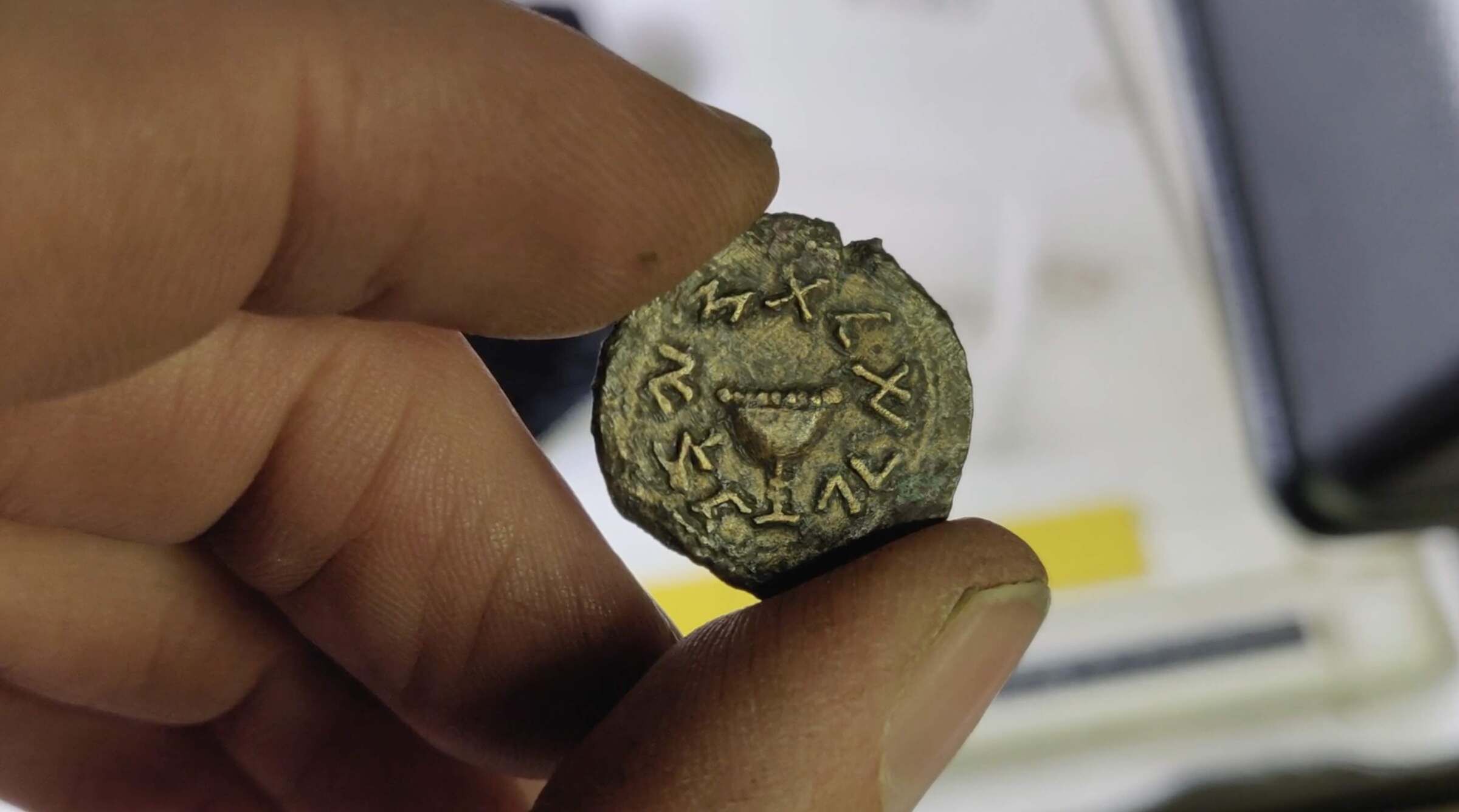
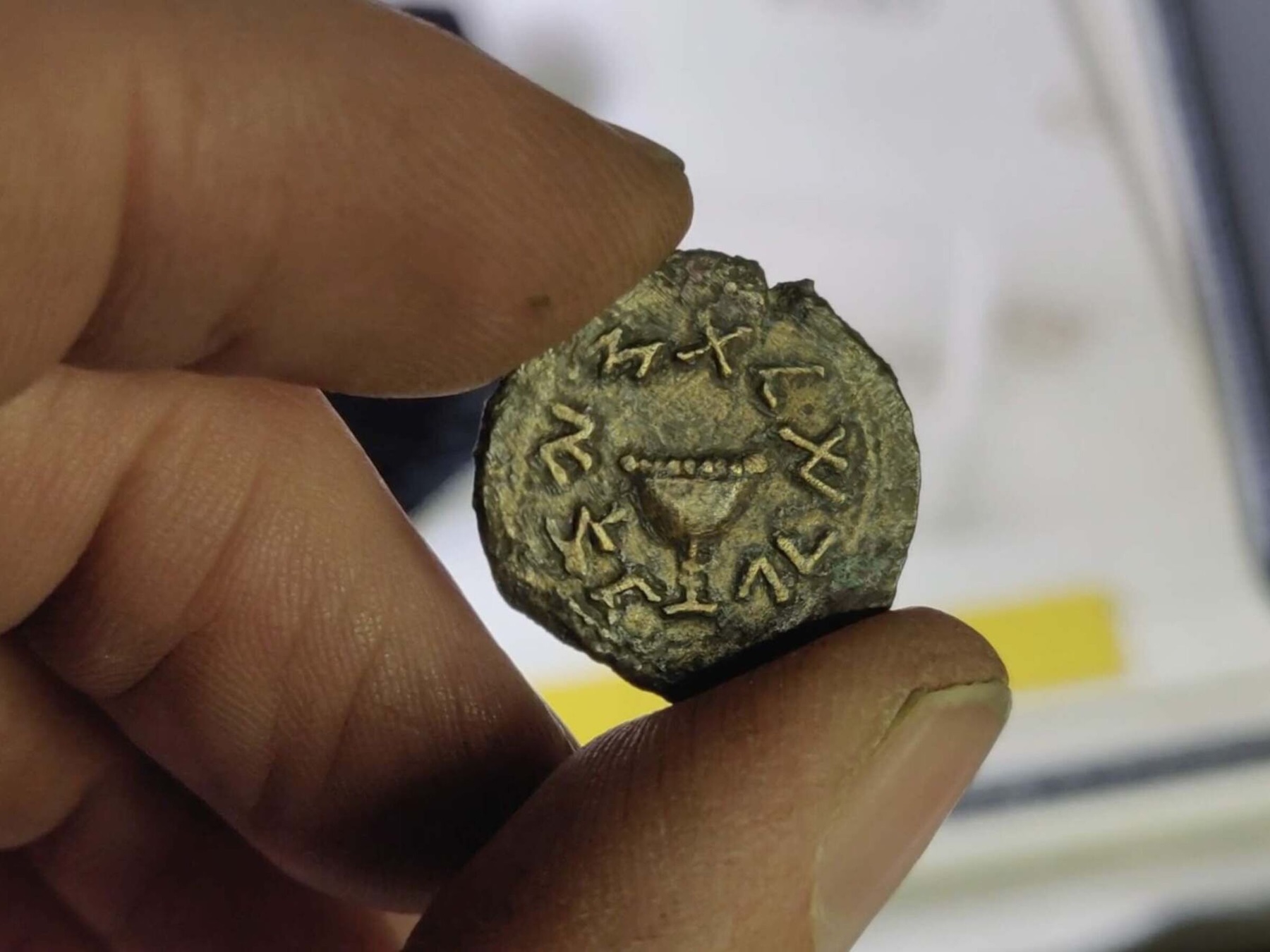
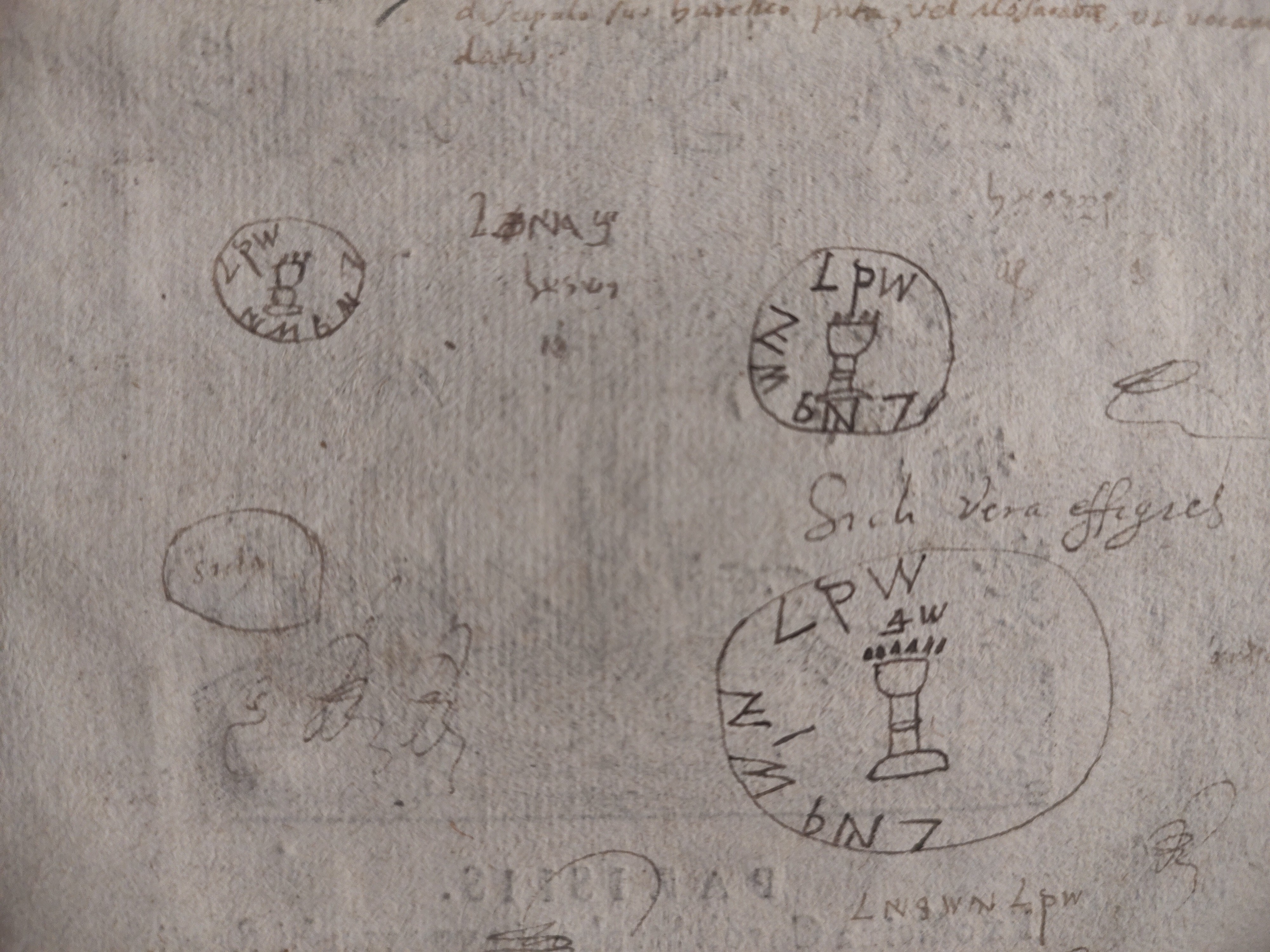
Our specific copy was printed in 1556 by the Christian printer Pierre Le Loyer in Paris. Le Loyer is mostly known for authorizing an eight-volume series on all kinds of spiritual and hermetic phenomena throughout the ages. When looking at the backside of the titlepage, one can find curious doodles of coins, but not in modern Hebrew or Latin lettering. In fact, these images are drawings of coins cast during the Jewish revolt in between 66-69CE. When the Jews started to rebel against the Romans in the year 66CE, they decided to cast their own coins from temple storage to differentiate themselves from the Romans. These coins are imprinted with Paleo-Hebrew inscriptions.
This doodle shows us the front of the coin, saying “Shekel, Israel, Year 3” and is illustrated with a chalice. Next to it, I included the image of a similar coin casted in the year 4 and later found during the Ophel excavations. I do wonder how a previous owner encountered ancient coins from Israel. Do you see the similarity between the drawing and the original?

Written by
Kyra Gerber
Kyra Gerber is a PhD candidate at the University of Amsterdam and a researcher working for the Ritman Research Institute. Her research primarily concerns the Jewish mysticism of Kabbalah, Hebrew language prints, and 19th century Jewish intellectual history.

.avif)