

.svg)
.svg)
Travelling North: Early Modern Hebrew Printing as a Multi-Confessional, Trans-National Project
By
Kyra Gerber
March 15, 2026
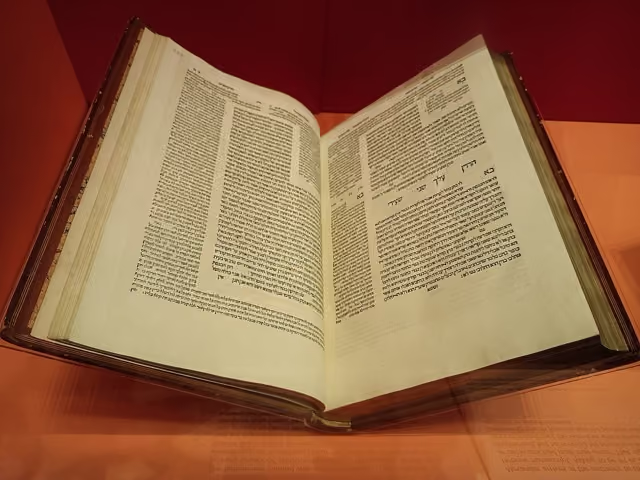
Daniel Bomberg, open folio from the Babylonian Talmud (Tractate Tamid), Venice, c. 1520–1523. Britis

Travelling North: Early Modern Hebrew Printing as a Multi-Confessional, Trans-National Project
Daniel Bomberg, open folio from the Babylonian Talmud (Tractate Tamid), Venice, c. 1520–1523. Britis

Travelling North: Early Modern Hebrew Printing as a Multi-Confessional, Trans-National Project
By
Kyra Gerber
March 15, 2026
Let us travel back to the year 1520 in Venice, in Northern Italy. Upon entering the local printing shop of Daniel Bomberghen, an exceptionally renowned Dutch-Flemish printer who had settled in Venice in 1516, you encounter an unusual print. Written in Hebrew characters and divided into three separate columns, this printed folio looks like nothing you have ever seen before. What at first sight seemed to be just one of the many prints in the house of Bomberghen (often “Bomberg” in print) would eventually revolutionize the way we print and structure the Talmud, the oral law of Judaism, up to the present day.
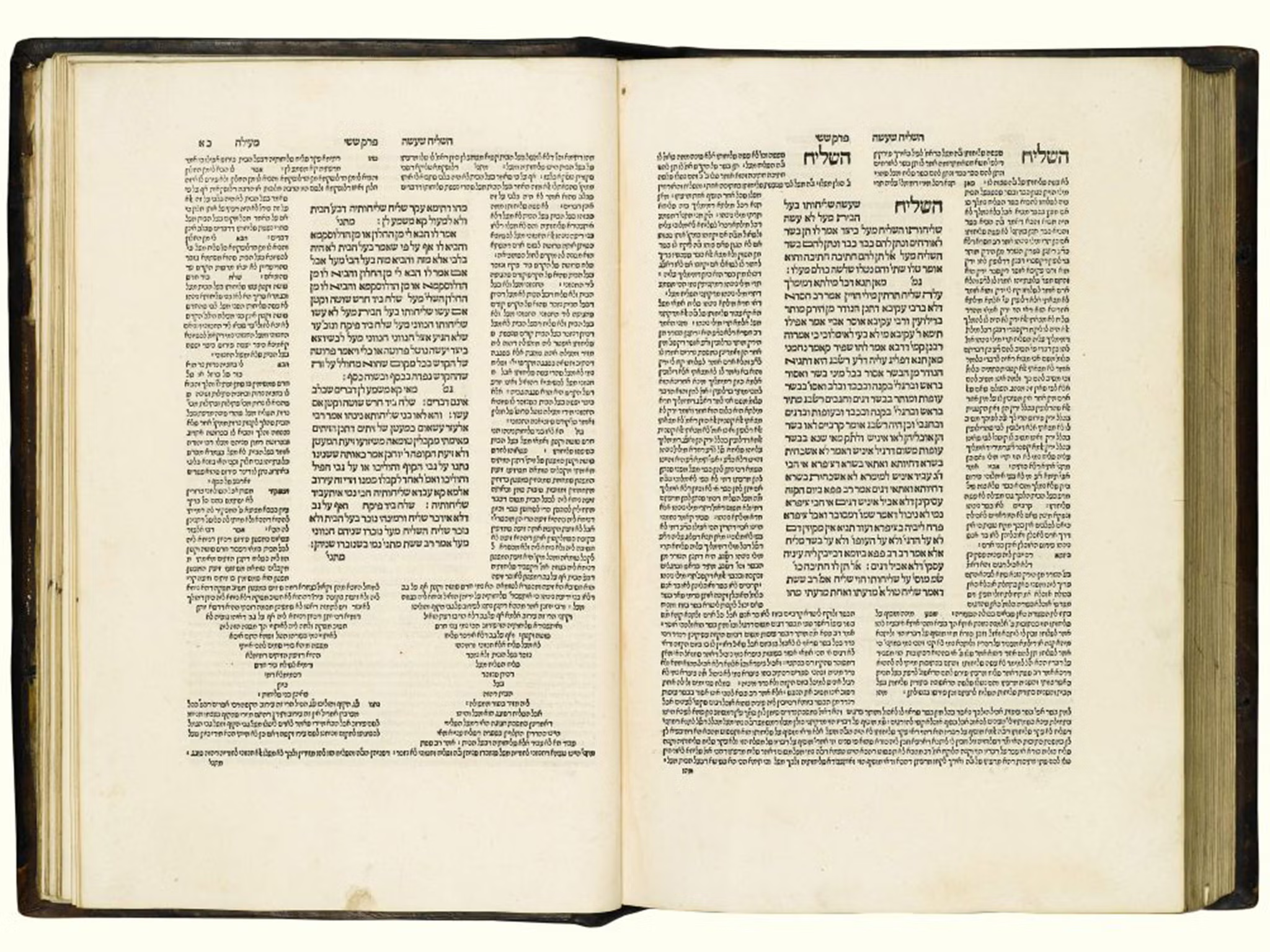
The edition was designed in collaboration with the Jew Jacob b. Chayim, who compared many different manuscripts of the Talmud and ultimately united the Talmudic text and commentary on a single page. Previously, these had been preserved in separate manuscripts, making it necessary to open both manuscripts in order to consult the text and its commentary. By organizing the commentary and the source text in columns on the same page, the student and learned rabbi alike could immediately consult and compare both with a single glance.
Eventually, Bomberg and Chayim managed to reorganize, publish, and print the entire corpus of the Talmud. Printing such a corpus was more than a challenge and an ambitious endeavour: the entire corpus contains about two million words and sixty-three tractates. To be able to produce such a monumental work, elaborate craftsmanship was needed.
First, the individual letters had to be cut, and afterwards they were cast. A great number of individual letters was required to print such an extensive corpus, and every page was assembled letter by letter with a composing stick. In line with earlier prints by the Soncino family, Bomberg decided to commission Sephardi square letters, often believed to be closest to the “real” and “ancient” Hebrew, as many learned Jews speculated.
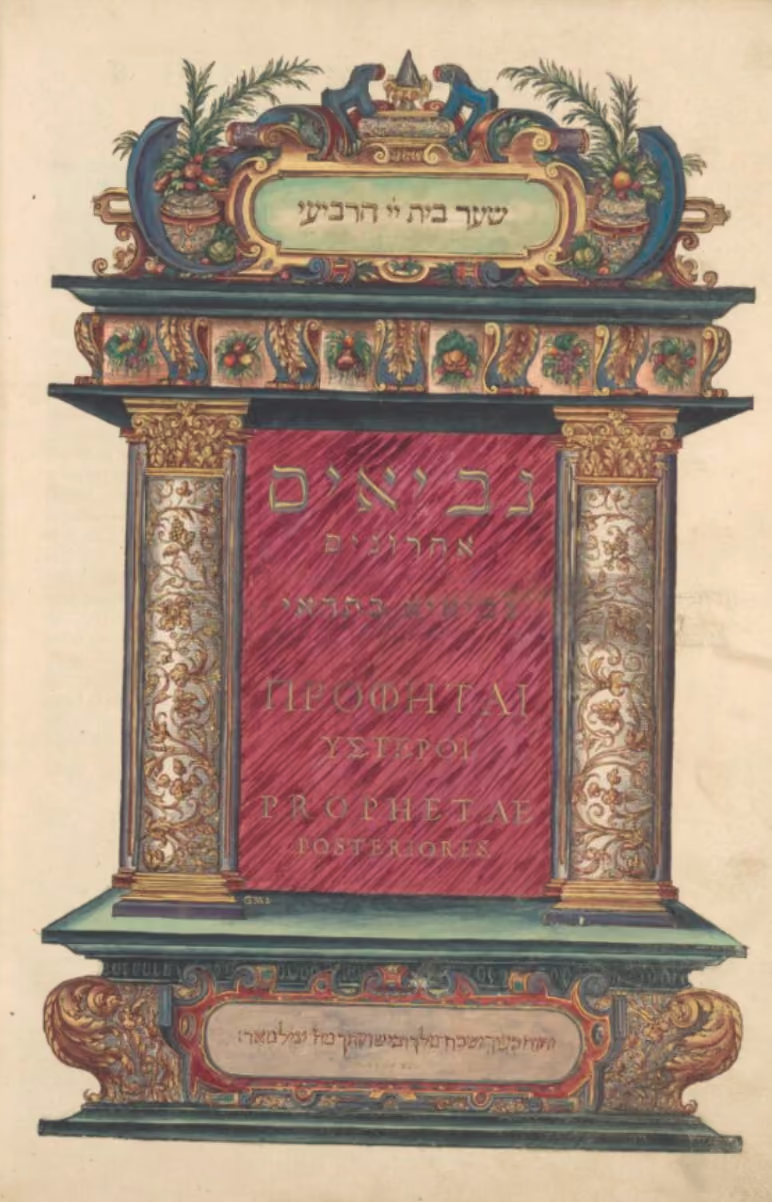
Although early modern printers were first and foremost businessmen who would only print books that would presumably generate profit, many considered themselves engaged in melekhet ha-kodesh (‘holy work’). This sense of vocation fostered collaboration between artisans and craftsmen and demonstrates the pride and care they devoted to editions of the ‘holy scriptures’.
Fabricating the Talmud was thus connected not only to business and practicality, but also to sacrality and a pious endeavour.
Ultimately, the marvellous typeface that was custom-made for Bomberg did not remain in Venice for long. Daniel Bomberg spent the last three years of his life in Antwerp and brought his type with him. Through his nephew Cornelis - his heir and Plantin’s partner until 1567 - the typesetting material came into the possession of the printing press of Christophe Plantin and his Officina Plantiniana, undoubtedly one of the most important printing houses in early modern history.
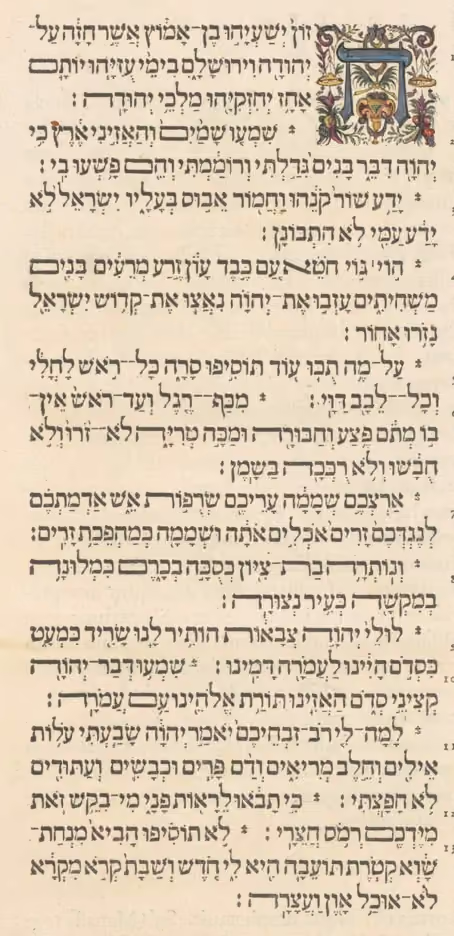
There, it served as the Hebrew typeface for the “Queen of all Polyglots,” a Bible edition featuring the original Hebrew text with its translations side by side, and it would eventually inspire the developing Hebrew printing market of Amsterdam.
The full story of the migration of Hebrew type and its multicultural, complex meanings can be found in the article in our new exhibition catalogue, available from the 24th of March. The exhibition, dedicated to the fascinating history of the House with the Heads, will also feature an original imprint of the Antwerp Polyglot Bible, printed by the legendary Hebrew types that were custom made for Bomberg. Come and visit our exhibition to learn more about the rich cultural history of Amsterdam and beyond, showing how intellectual work can cross borders of religion, time, and space.

Written by
Kyra Gerber
Kyra Gerber is a PhD candidate at the University of Amsterdam and a researcher working for the Ritman Research Institute. Her research primarily concerns the Jewish mysticism of Kabbalah, Hebrew language prints, and 19th century Jewish intellectual history.

.avif)