

.svg)
.svg)
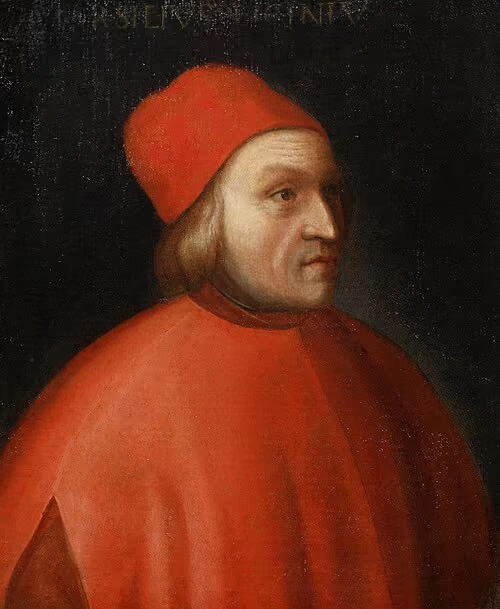
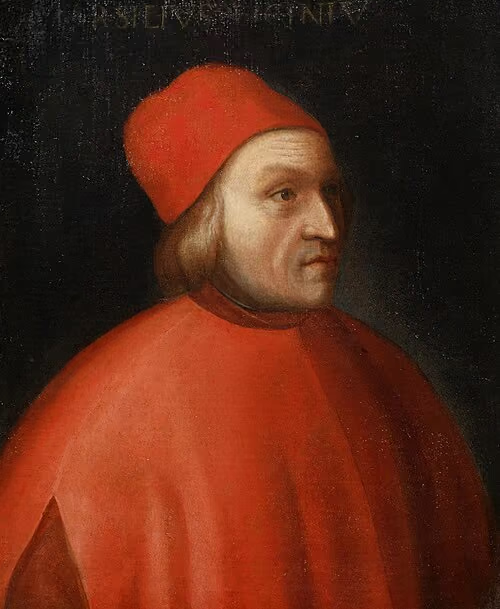
Portrait of Marsilio Ficino attributed to Cristofano dell'Altissimo, c. 1552–1568

Marsilio Ficino - Music Therapist
Portrait of Marsilio Ficino attributed to Cristofano dell'Altissimo, c. 1552–1568

Marsilio Ficino - Music Therapist
By
Natalie Koch
February 15, 2026
Anyone who has ever been moved to tears or cheered up by a piece of music knows that music has something magical about it. A simple shift in melody or harmony can have an immediate effect on our emotions, yet the question remains: how can something that basically consists of nothing more than sound waves affect the human body and mind in such a way?
One philosopher who sought to answer this question was the Italian humanist Marsilio Ficino (1433-1499), whom we all know as the first translator of the Corpus Hermeticum.
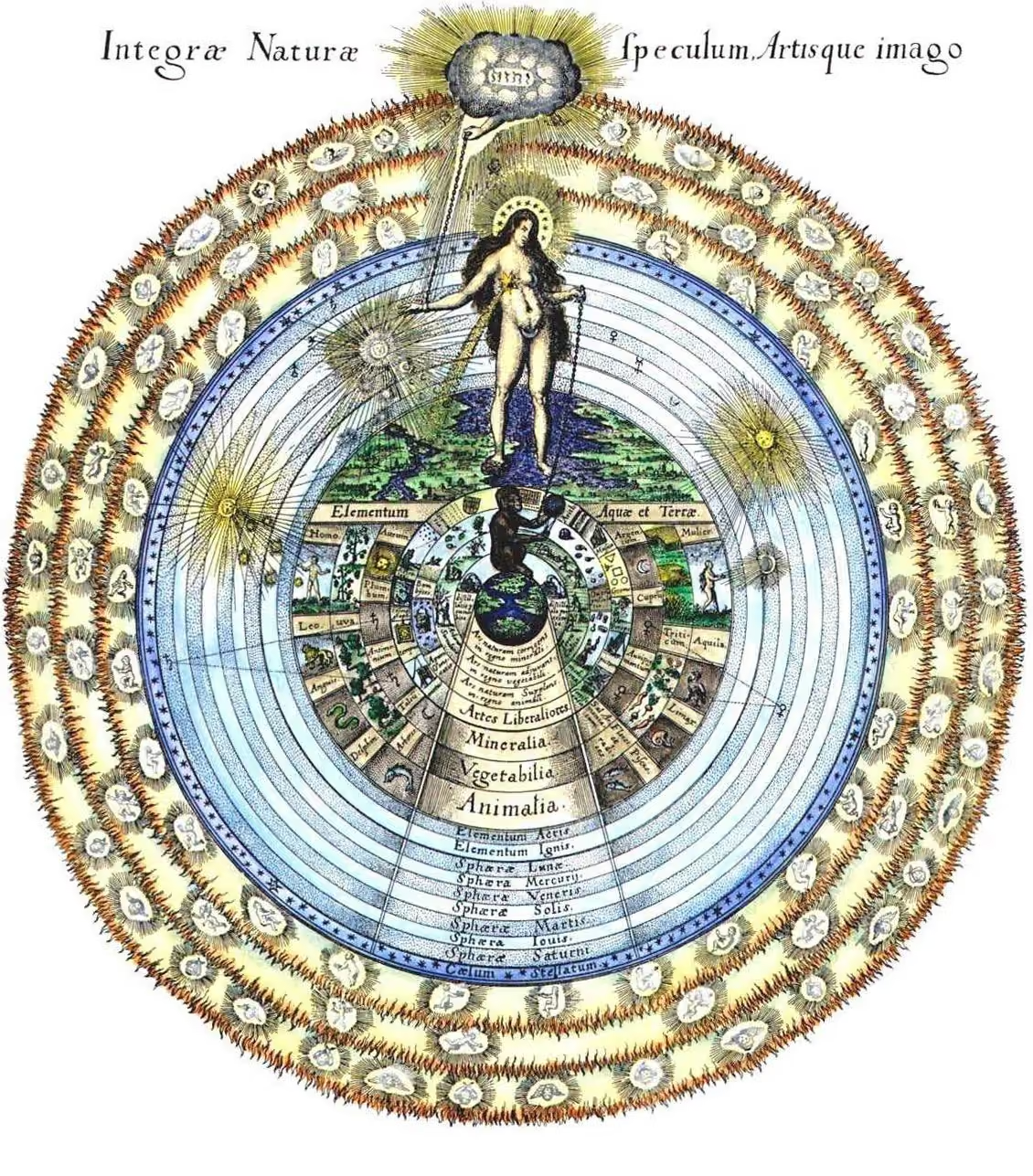
For Ficino, music, more than any other form of art, had miraculous powers. He saw harmony in the first place as a moral concept: the idea of the harmony of the spheres mirrors the cosmic order which is good and just. In order to attain true happiness, humans should live according this cosmic harmony and base their choices between good and evil upon it. To be able to do so, one should be able to think and act clearly, and therefore, the mind should be cleansed from all disturbing emotions, such as gloom, anxiety, and despair (which in Ficino’s time were called ‘melancholia’ and were seen as the result of a surplus of black bile).
Ficino was convinced that music, whether by playing an instrument or just listening, could restore a healthy emotional balance within the soul. Singing, for instance, was an important part of intellectual and spiritual exercise, because it could bring the singer in touch with the divine.
It was by no means the first time that healing properties were attributed to music. Pythagoras had already observed that certain tunes and rhythms could calm the mind and the soul, while others had an invigorating effect. Convinced of the beneficial effects of music, he had it made a custom at his school in Crotona to start and end each day with singing. In the morning, songs were sung that helped to wake up and inspire for activities, in the evening, songs that induced relaxation.
But why would music be the ideal remedy for emotional disturbances?
Based on the ideas of Plato as described in the Timaeus (c. 360 B.C) and the subsequent commentaries, Ficino developed an interesting, and rather complicated theory. Plato argued that sound passes through the ears directly into the brain, setting the rational soul in motion, which in turn influences the irrational soul, which resides in the heart and the liver.
Elaborating on this, Ficino describes how, when a sound is being made, ripples of air, similar to circles in water when a stone is thrown in, reach the human ear. These ripples of sound are similar to the ‘transparent circle of the human mind’, which in its turn corresponds with the spherical form of the World Soul (anima mundi), Plato’s notion of the ethereal spirit which permeates everything in the world. After having passed the ears, these circular sounds travel from the head through the body and back, passing the heart and the liver, the domains of the irrational soul. The ‘means of transport’ is blood, or, to be more specific, the air and ‘spiritus’, a rarefied component of air, that was supposed to be present in blood.
Hearing, therefore, is for Ficino more than just a process happening in the ear; it is a movement in which the whole body is involved, which means that of all the senses, hearing is the deepest, most powerful way the outer world can communicate with the inner being. A harmonious sound would affect the emotions of the hearer more directly and intensely than any other thing that can be experienced through the senses. That would mean that by playing or singing the ‘right’ kind of music - music that imitates the perfect movement of the music of the spheres, not the human passions - emotional imbalances could be restored.
Obviously, this music must be consonant, because the wave motions of consonant intervals merge easily into one harmonious sound, corresponding to the ratios of cosmic harmony, whereas the sound waves of dissonant intervals are more out-of-step and do not melt into one consonant sound. Dissonant intervals therefore will lead to agitation and an irregular pulse. But, in addition to the properties of consonances, musicians also needed to know the effects of slow or fast tempos, and high or low notes, and be well versed in all other sorts of knowledge, such as astrology and the properties of elements and humors in order to be effective music therapists.
Ficino may have had personal motives for exploring the therapeutical qualities of music. Being of a melancholical temperament himself, he may have sought to heal not only others, but also himself.

Written by
Natalie Koch
Natalie Koch is a musicologist, Dutch novelist, and curator at the Bibliotheca Philosophica Hermetica. Published by Querido, her work spans from Victorian London to contemporary Holland. Stargazer, absinthe-lover, restless spirit.

.avif)