

.svg)
.svg)
The "Intelligible Sphere" Maxim in De maximis theologiae (Basel, 1492)

Is the ‘Hermetic’ Definition of God actually Hermetic?,
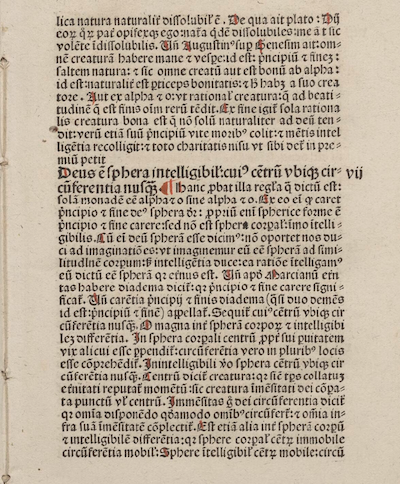
The "Intelligible Sphere" Maxim in De maximis theologiae (Basel, 1492)

Is the ‘Hermetic’ Definition of God actually Hermetic?,
By
José Bouman
July 15, 2025
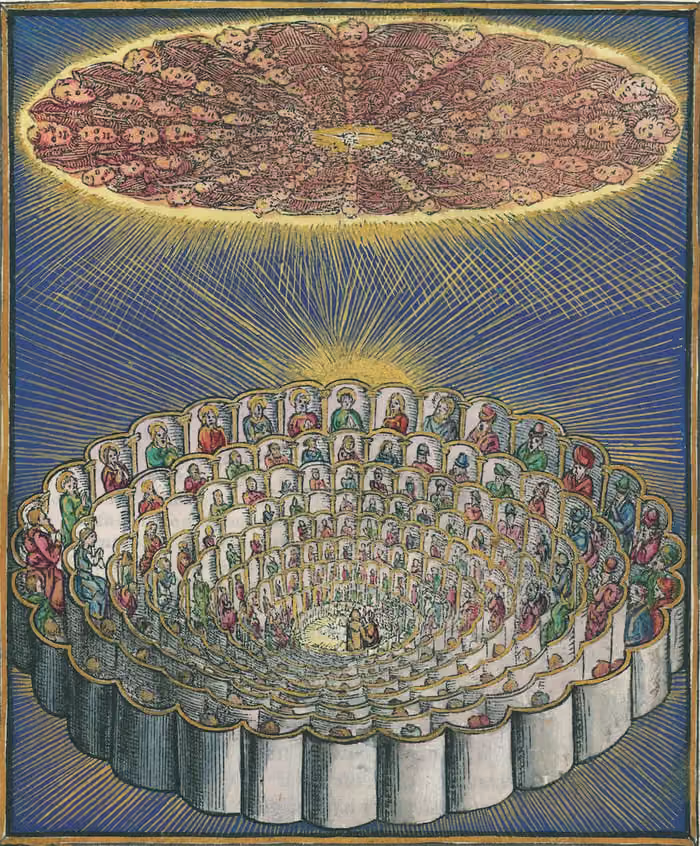
“Deus est sphaera infinita cuius centrum est ubique circumferentia nusquam”
“God is an infinite sphere of which the centre is everywhere and the circumference nowhere”
This is a much-cited hermetic definition of God, but its exact provenance still puzzles scholars. It does not come from the Corpus Hermeticum, and is probably not nearly as old as the original Hermetic texts.
What we do know: this is one of 24 descriptions of God from the Book of the 24 philosophers, an anonymous medieval work, by some thought to be composed in the 4th century AD. There are Latin manuscripts containing this text, but the oldest ones are not earlier than the 12th century, usually in collections of philosophical or Hermetic miscellanea. The oldest printed version of this definition is to be found in a book by Alanus ab Insulis (Alain de Lille, c. 1128-1203), a French theologian and poet, in De maximis theologiae, printed in Basel in 1492. It shows the variant phrasing that we sometimes encounter: ‘intelligible sphere’ for ‘unendly sphere’. It occurs in Alanus’ principal didactic work which provides 134 sentences for contemplation, with commentary to facilitate that final fulfillment.
This incunable is available and to be consulted in the BPH collection.

Written by
José Bouman
Drs José Bouman has been head curator of the Bibliotheca Philosophica Hermetica since 1983. She has shaped every museum exhibition since and specialises in Dutch medieval literature.

.avif)