
.svg)
The Number of the Sun: Magical Squares and Riddles in The Güldene Rose (1767)
By
Kyra Gerber
November 15, 2025
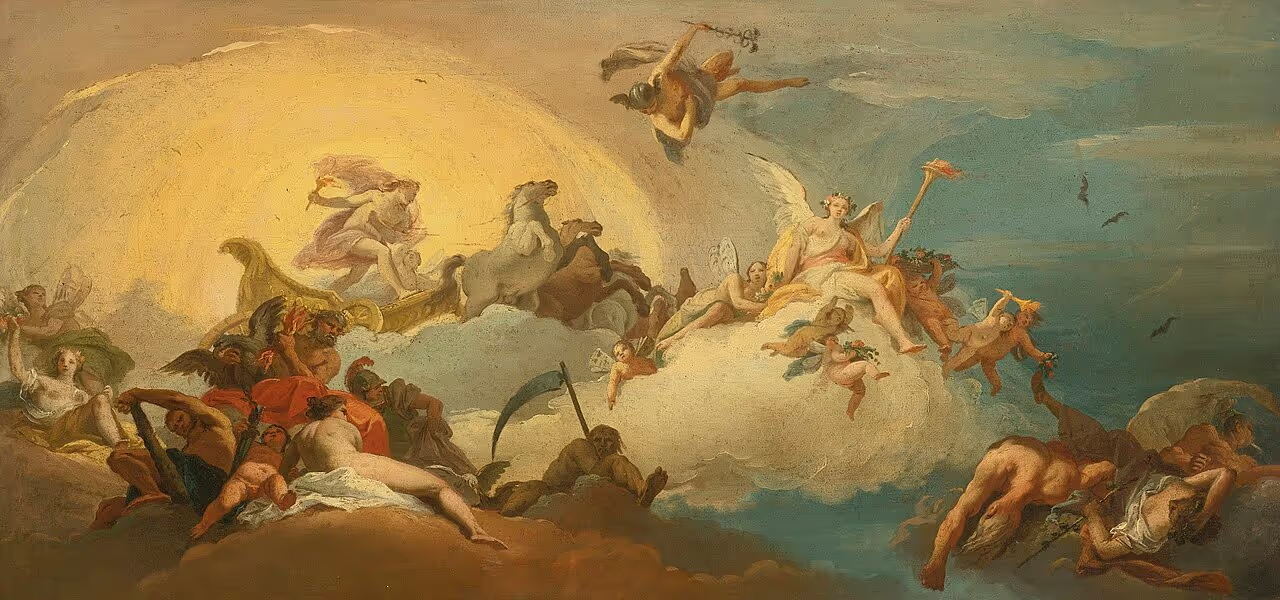
'Aurora with Apollo Driving the Sun Chariot', Costantino Cedini, oil on canvas, ca. before 1811.

The Number of the Sun: Magical Squares and Riddles in The Güldene Rose (1767)
'Aurora with Apollo Driving the Sun Chariot', Costantino Cedini, oil on canvas, ca. before 1811.

The Number of the Sun: Magical Squares and Riddles in The Güldene Rose (1767)
By
Kyra Gerber
November 15, 2025
As the days grow darker and colder, we are in need of a little extra sunlight. So why not turn to one of our alchemical texts for some hints of sunshine? The Güldene Rose, d.i. Einfältige Beschreibung Des Allergrössesten von dem Allmächtigsten Schöpfer (“The Golden Rose: Simple Description of the Greatest Creator”) is a collection of alchemical poems.
It was written by J. R. V. M. D., and to this day, scholars continue to debate how to decipher these initials. Most likely, the author was the German alchemist Jacob Rösser (1642 – c. 1712), which would explain the first two letters. The book is also dedicated to ‘Friedrich I, King of Prussia, my merciful king and lord.’ As Rösser lived in Berlin during the reign of Friedrich I, it seems even more plausible that he was indeed the author.
The first poem, titled ‘Address to the true Wisdom-Children,’ confronts its reader with a riddle:
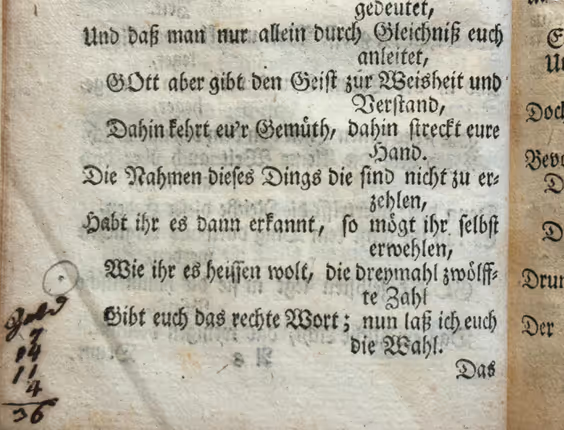
How it is called, three times number twelve,
This provides you with the right word,
I leave you the decision, only gold is alike,
and is very similar, although it is no gold, what the wise saw.
A curious earlier reader calculated the ‘Zahl’ (‘number’) mentioned in the poem as 36. This number is associated with the magical square of the sun, which is arranged in a 6 by 6 grid. The same reader also drew a circle with a dot inside - the alchemical symbol for the sun. Clearly, the poem invites the reader to think of the sun.
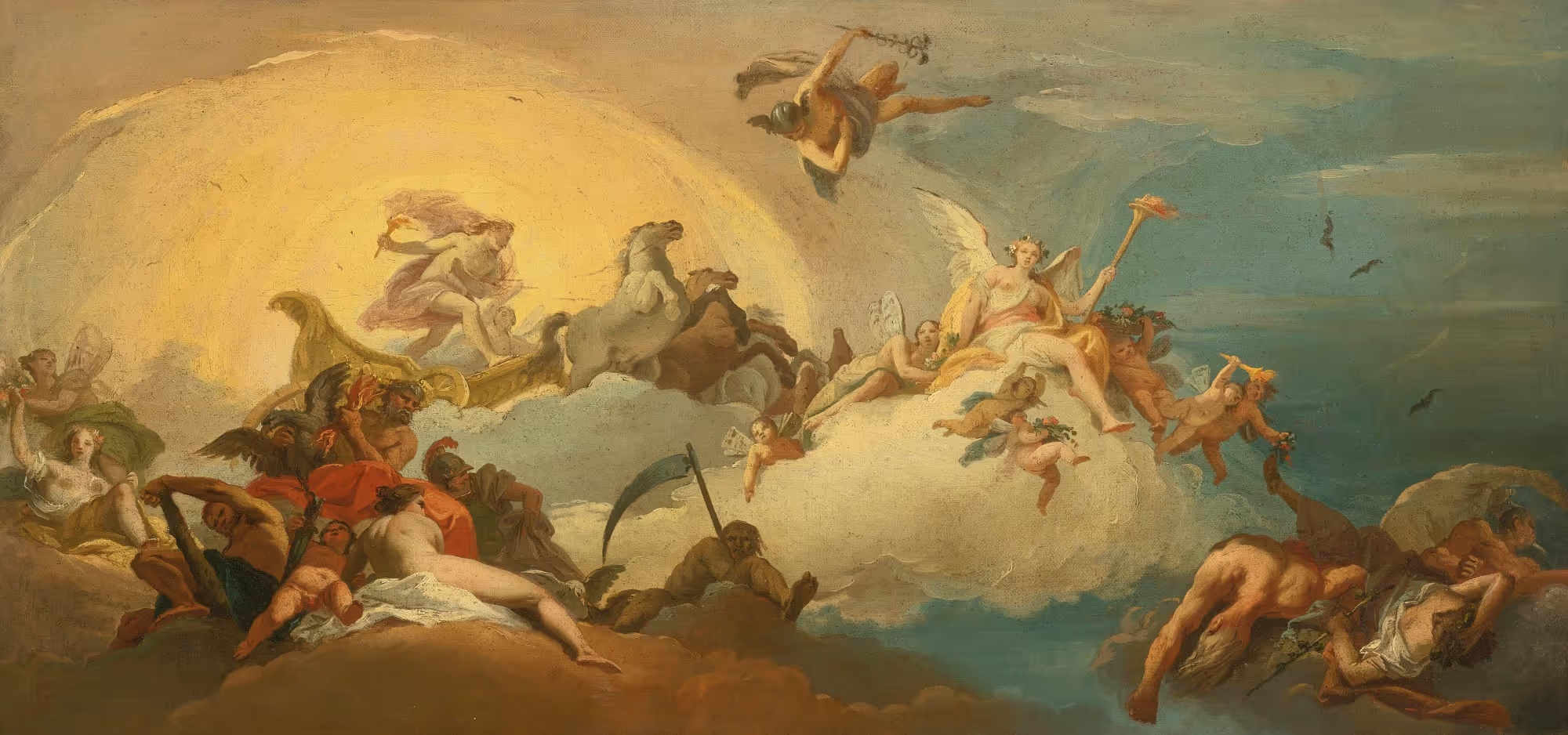
The sun is a recurring symbol in alchemy, often used to represent the day and night dichotomy that reflects one of the core dual principles of alchemical thought. Next to day and night, these principles entail male and female, warm and cold, sun and moon, active and passive, sulphur and mercury, and even more. Moreover, the sun is linked to the metal gold, regarded as the purest of all metals. It also governs Sunday and is associated with Apollo, and the archangel Michael.
May our winter days be filled with many golden, sunny, and warm moments.

Written by
Kyra Gerber
Kyra Gerber is a PhD candidate at the University of Amsterdam and a researcher working for the Ritman Research Institute. Her research primarily concerns the Jewish mysticism of Kabbalah, Hebrew language prints, and 19th century Jewish intellectual history.

.avif)