


.svg)
Title Page 'De verbo mirifico', Johannes Reuchlin, 1494.

The Wonder-Working World of ‘Christian’ Reuchlin
Title Page 'De verbo mirifico', Johannes Reuchlin, 1494.

The Wonder-Working World of ‘Christian’ Reuchlin
By
Kyra Gerber
December 15, 2025
Johannes Reuchlin (1455–1522) must be counted among the most influential Christian Cabbalists of the early modern period.
A diplomat, philosopher, humanist, and cabbalist, he is perhaps best remembered for his defence of Jewish literature against the Inquisition. His life was remarkably eventful: he served as a private tutor to several nobles, worked as a judge in the Schwäbische Bund, and was eventually appointed Professor of Hebrew and Greek at the University of Tübingen in 1521.
Reuchlin’s interest in Jewish Kabbalah had its beginnings in a conversation with the Christian Cabbalist and friend of Marsilio Ficino, Giovanni Pico della Mirandola (1463-1494), whom he met in Italy in 1490. Like Mirandola, Reuchlin hoped to find within the Jewish Kabbalah a confirmation of Christian mysticism. In 1494, he published in Basel his “De verbo mirifico” (“The wonder-working word”), his first publication on (Christian) Cabbala. It consists of three conversations between the fictional author (Capnion), an epicurean philosopher (Sidonius), and a Jew (Baruchias).
However, this volume reveals that Reuchlin’s knowledge of Kabbalah was still rudimentary. It mainly emphasizes Reuchlin’s own efforts to create a Christian Cabbala. One of the most well-known ideas represented in De verbo mirifico is the similarity between the Hebrew name of God, YHWH, and the Hebrew name of the Christian Messiah Jesus (“Yehoshua”), which Reuchlin transcribed as YHSWH. The protagonist Capnion convinces the Jewish character Baruchius that Jesus is the true Messiah, since, if one adds the letter “S” in the middle of the Tetragrammaton, the name of Jesus is created. This innovation was his main contribution to Christian Cabbala.
Twenty years later, Reuchlin returned to publish on Kabbalah. In the meantime, he had studied some Jewish kabbalistic manuscripts, especially the works Ginnat Egoz and Sha’arei Orah from the Spanish kabbalist Joseph ben Abraham Gikatilla (1248-1305).
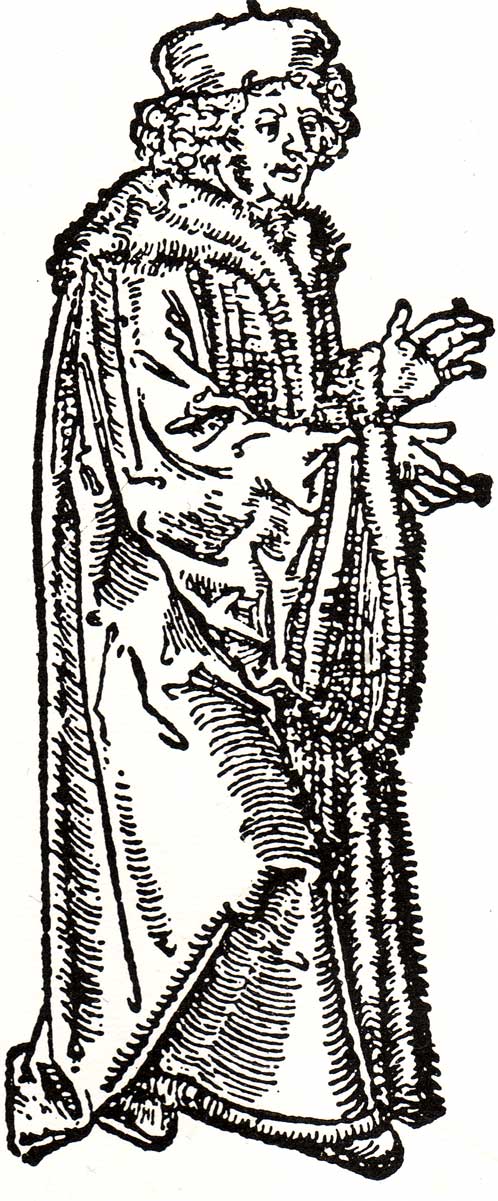
Based on his studies of Gikatilla, Reuchlin compiled another book on Kabbalah, his “De arte Cabalistica” (On the Cabalistic Art, 1503/7), which he dedicated to Pope Leo X. Again, he presented his theses as a conversation between the Jewish kabbalist Simon, the Muslim Marannus, and Philolaus, who represented Pythagorean and mystical philosophy.
However, in contrast to his first book, Reuchlin now identifies himself with the Jewish kabbalist and explicitly underlines the affinity between central kabbalistic teachings and the thought of Nicholas of Cusa (1401-1464), a highly learned German humanist and mystic. The first and third chapters of De arte Cabbalistica discuss key concepts of Kabbalah at length and express sympathy for this body of thought, while the second book contains a long dialogue on Pythagoras’ philosophy.

Written by
Kyra Gerber
Kyra Gerber is a PhD candidate at the University of Amsterdam and a researcher working for the Ritman Research Institute. Her research primarily concerns the Jewish mysticism of Kabbalah, Hebrew language prints, and 19th century Jewish intellectual history.

.avif)