

.svg)
The ‘Dweller of the Threshold’ in Western Initiatory Literature
By
Corey Andrews
December 15, 2025
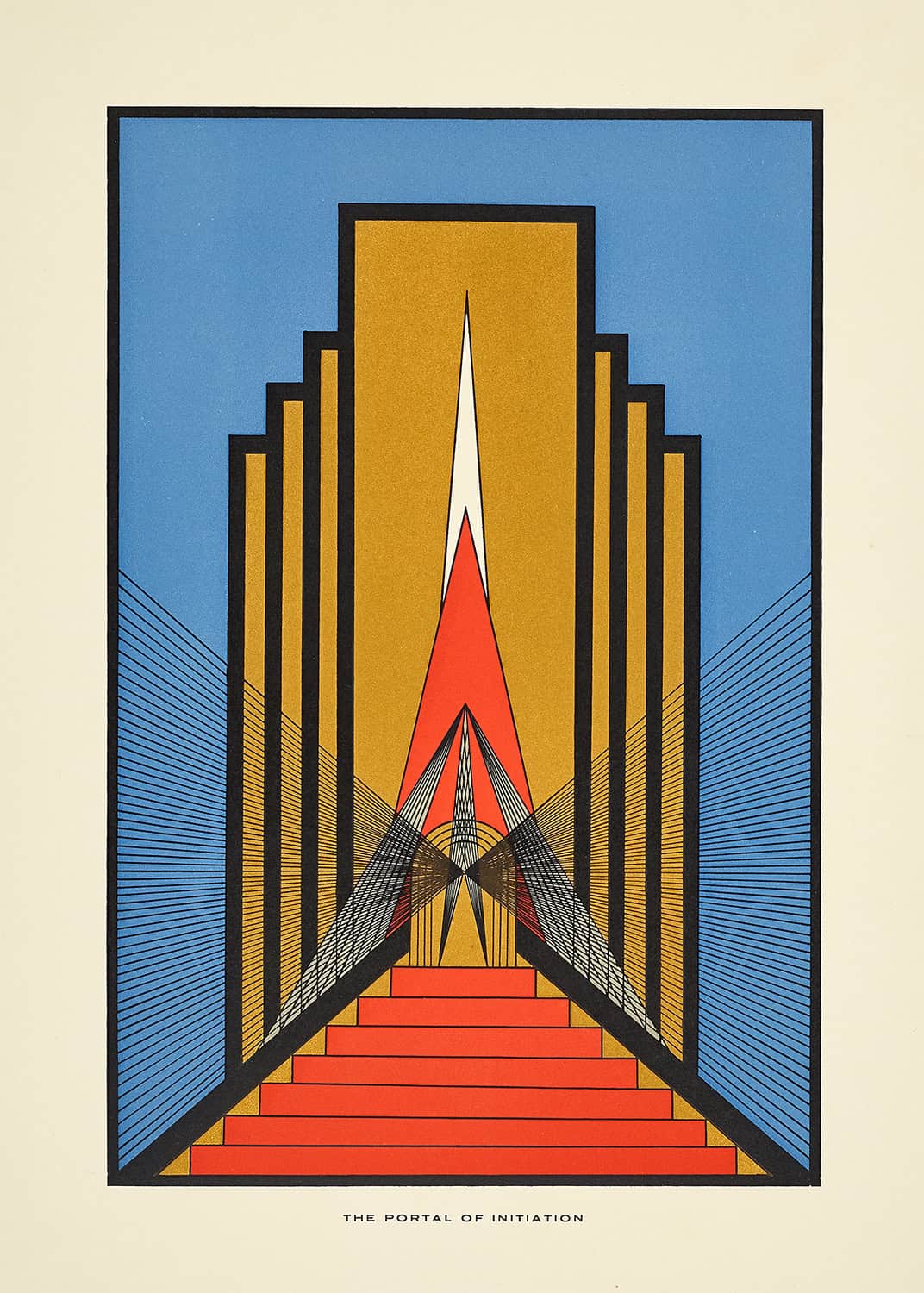
'The Dweller on the Threshold', Reginald Machell, c. 1885

'The Dweller on the Threshold', Reginald Machell, c. 1885
The ‘Dweller of the Threshold’ in Western Initiatory Literature
By
Corey Andrews
December 15, 2025
"...no foe is so malignant to man... know, at least, that all of us – the highest and the wisest – who have, in sober truth, passed beyond the threshold, have had, as our first fearful task, to master and subdue its grisly and appalling guardian."
— Bulwer-Lytton, Edward (1874). Zanoni. Routledge. p. 103.
Described by many esoteric teachers as a menacing figure, the ‘Dweller’ or ‘Guardian of the Threshold’ is claimed to be a specter which appears to the initiate as soon as they begin to ascend the path into the higher worlds of spiritual knowledge. Rather than deal directly with the Dweller archetype however, I’ll instead discuss a curious way it has repeatedly manifested in my own reading of the Western esoteric corpus of literature. It must be noted that we will only scratch the surrounding area around which the Dweller motif occupies – an exhaustive exploration of which one will have to seek in the rich Theosophical literature in which the specter is analyzed in the full depth it demands.
For some time now, I’ve been haunted by this motif, and in particular, the way it is used in initiatory literature. Let me explain: in many cases, four of which I will touch upon here, a moment of ‘ultimate instruction’ often precedes the dweller’s arrival in the use of what I call ‘abrupt endings’ within a text.
In one of the earliest examples, we need look no further than the Chymical Wedding of Christian Rosenkreuz (1616). This classic Rosicrucian story is filled with alchemical and mythological symbolism, and is, like the others, virtually inexhaustible in terms of interpretability. The story ends abruptly:
“From all this I understood that tomorrow I must sit by my gate. After they had all talked to me in friendship a little longer and given me their hands, they wished me God’s protection, and I was led by the two old men (the gentleman of the Tower and Atlas) into a splendid bedroom where three beds stood, and each lay in one of them. There we spent almost two…
[About two pages in quarto are missing here, in which the Author, thinking that he must be a gatekeeper in the morning, returns home.]

Hmm… strange. What are we to conclude from this? This baffled me – there has to be a lesson of some kind here. Then I encountered it again in the following century in a long Christmas poem by Goethe titled ‘The Mysteries’ (Die Geheimnisse, 1784), which also ends suddenly, and which one finds in it remarkable allusions to the rose and cross, indicating his familiarity with the earlier Rosicrucian literature:
He clearly sees their wonderful apparel,
The white resplendent garments which they wear,
Their girdles made of intertwining roses,
The wreaths of flowers in their curly hair;
They seem to come from some nocturnal dances,
With joy of movement thrilled, enlivened and fair.
But as the stars will fade, when day is near,
Extinguishing their torch, they disappear.
This intrigued me further, but I still viewed the phenomena as merely indicating continuity between the two texts. Amusing, sure - but nothing more.
But then I encountered the most striking example in what would eventually become, without question, my absolute favorite fictional work in all Western mystery literature. The best example of the ‘literary device’ under discussion is to be found in Sir Edward Bulwer-Lytton’s 1842 classic, Zanoni: a Rosicrucian Tale. Lytton frames the narrative at the beginning in such a way to suggest that after making contact with and eventually gaining the trust of an antiquarian book collector, a manuscript was passed into his possession ‘written in an unintelligible cipher’ – a manuscript which, through the author’s re-telling, became Zanoni.
In short, it tells the story of its protagonist Zanoni, a Rosicrucian initiate who possesses occult powers and knows the secret of eternal life. Failing to heed the explicit and repeated warnings of his master and fellow immortal initiate Mejnour not to fall in love with Viola, Zanoni’s love interest, Zanoni does so and as a consequence loses his immortality. Throughout the book, Zanoni and Mejnour engage in many dialogues on topics pertaining to secret knowledge, and as the narrator makes clear in the lengthy, thought-provoking introduction, the work, “like [Goethe’s] enigmatical Faust, deals in types and symbols.” More could be said but it goes beyond the scope of the length allotted for the Codex.

In any case, at a crucial stage of the story, our attention is arrested in the heights of the most intriguing dialogue between Zanoni and Mejnour where something simultaneously amazing and vexing occurs. As quoted in Joscelyn Godwin’s classic The Theosophical Enlightenment (1994) where I initially encountered the passage, it reads as follows:
At one point the narrative is interrupted by an ‘erasure in the manuscript’ which immediately puts one on the alert. What is Lytton pointing our attention to with this transparent device? The words surrounding the gap are:
Glyndon was surprised to find Mejnour attached to the abstruse mysteries which the Pythagoreans ascribed to the occult science of NUMBERS. In this last new lights glimmered dimly on his eyes; and he began to perceive that even the power to predict, or rather to calculate, results, might by
But he observed that the last brief process by which, in each of these experiments, the wonder was achieved, Mejnour reserved for himself, and refused to communicate the secret.
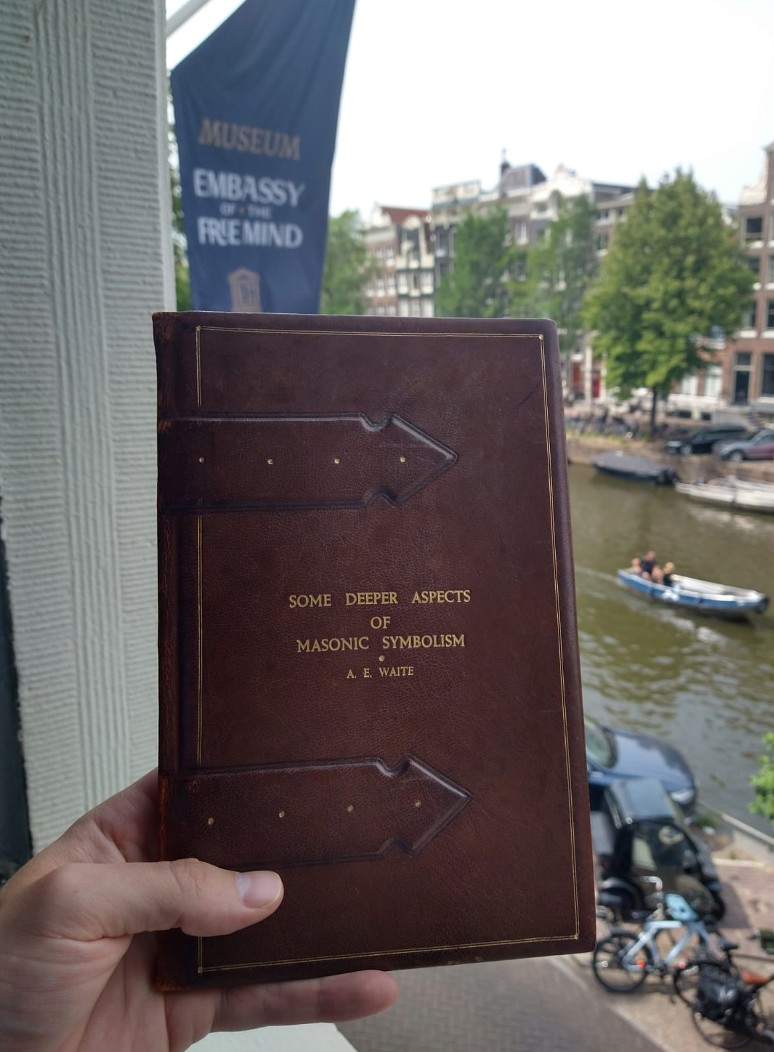
This one struck me with some force. What could these authors possibly be pointing at? What was I to make of this phenomenon? For a long time, I puzzled over this, even including it in a few presentations I gave. In fact, it occupied some discussion in a lecture I gave in our museum last year – (for those who have made it this far, I provide a link below to this password-protected lecture. The password is: Psycopter).
‘Someone has to have discussed this phenomenon before’, I reasoned to myself. I found nothing. But then! After I gave up, in the process of searching for something else, I came across an article titled ‘The Emergence of the Geheime Figuren’ written by a foremost historian of Hermetism and Rosicrucianism, Carlos Gilly - and in one of our own publications no less! In the article, Gilly quotes a passage from the 17th/18th century German alchemist Georg von Welling (1655-1727), who exerted an enormous influence on Goethe:
It is true that the author sometimes breaks off abruptly in the greatest of secrets, and when one thinks, one will now find the gate to the most secret wisdom wide open, he draws it close unexpectedly, and leaves the reader in deep musings. Only he who understands the nature and quality of such things, does not think such things strange, because the true adept does not reveal everything he knows, it might not be possible or allowed, or even useful, because they are held back by something higher, which although they do not know it yet they […]
In keeping with our theme, I’ve opted to cut the last quote off at the knees, though for the frustrated, insatiably curious amongst you, you can find the full passage in a link below to Carlos Gilly’s entire original article where it appears on page
By intention or not, Carl Jung (one of the deepest students of the Rosicrucian corpus), chose(?) to end the epilogue of his magnum opus The Red Book (Liber Novus) abruptly in the middle of a sentence as well (see p. 360 of Shamdasani’s 2009 translation). To me, the abrupt ending ‘device’, perhaps like the Dweller, is a point or ‘spectre’s path’ across which only you may pass, and at one’s own risk. No other can take the next step, ‘defeat the dragon’, nor acquire the ‘treasure hard to attain’ as a consequence of successful encounter. It is up to the reader, or initiate, to complete the cycle for themselves; or put another way, to take the tentative stride into the unknown and confront what awaits them on the other side of the threshold from which no return is possible.
It's probably indicative of my own excessively associative way of thinking, but somehow it also evokes for me the scene in the gospel of John (18:37-38), where Pontius Pilate approaches Christ and inquires about the nature of truth. ‘What is Truth?’, Pilate asks - a question which Christ opts not to reply to; He opts for silence. For some, on one level at least, this can mean that it is up to each of us to come to our own conclusions about Truth. And for me, as with the Chymical Wedding, Goethe’s Faust, or Lytton’s Zanoni, oftentimes it is in the realm of ‘fiction’ where I find the most Truth.
In conclusion, an expression Jung made in conversation with Aniela Jaffé, his longtime secretary & collaborator is poignant to consider:
‘If there is a fear of falling, the only safety consists in deliberately jumping.’
As we approach the birth of new light, the Christmas & holiday season, and the close of the maiden year for the Codex, let us all take courage to boldly jump into the coming unknown cycle. Thank you for reading - until next year.
Written by
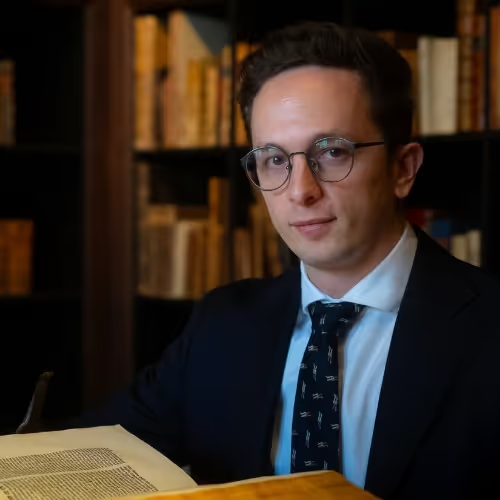
Corey Andrews
Corey Andrews is a PhD candidate at the University of Amsterdam and a researcher working for the Ritman Research Institute. His research focuses primarily on 17th and 18th century Rosicrucianism and the life and works of Jan Amos Comenius (1592-1670).

.avif)