
.svg)
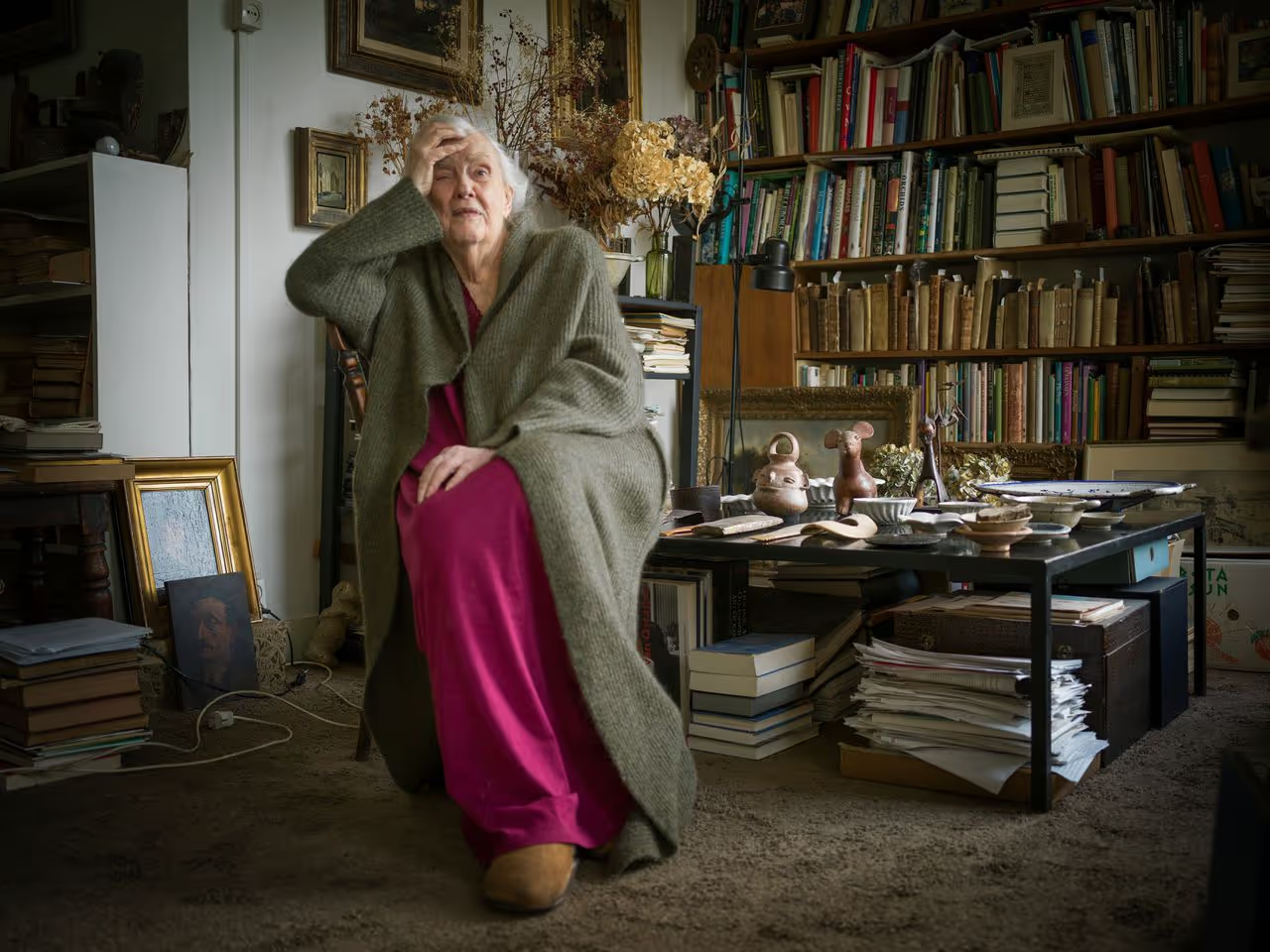
Wilma Schuhmacher in 2020. Foto Merlijn Doomernik, NRC.

Survival of the Smartest?
Wilma Schuhmacher in 2020. Foto Merlijn Doomernik, NRC.

What does clearing out an antiquarian bookshop have to do with the books of the Bibliotheca Philosophica Hermetica? At first glance, nothing at all — but look a little closer, and the picture changes.
Over the past months, most of my work at the Embassy of the Free Mind has consisted of selecting and clearing out books. Wilma, the owner of the antiquarian bookshop Schuhmacher, passed away this January (2025, for those reading this later), and she had donated the shop’s entire collection to the Embassy.
The antiquarian shop occupied a colossal building on the Geldersekade in Amsterdam: four floors, a basement, a large attic and a loft — and of course the shop itself, with a big, tall back room, a small office, and a kitchen. All of them crammed with books and journals: a collection built up over seventy years. We never counted the volumes, but there were far more than 100,000 — perhaps even twice that number.
How does such a collection come into being? An antiquarian dealer buys an estate, takes out what is interesting, and discards the rest. But if you have a lot of space and find it hard to throw things away, you end up keeping the books that aren’t interesting — the ones that bring in too little to be worth your serious attention. Besides, you never know. What seems worthwhile today may be forgotten in ten years, and vice versa.

We, the ones clearing out the estate, had to choose. The building that housed all those books was a rental, and it had to be returned empty. There were no resources to store everything. Selecting, boxing, hauling to recycling — it’s all physical, monotonous work. That kind of work, whether you like it or not, gives you time to think freely — a luxury you don’t have when you’re behind a computer or in conversation.
How do books survive? We have long lists of authors from classical antiquity, of whom not a single letter has come down to us. Others are known only through quotations. Some survive purely by chance: a lone manuscript found in a medieval monastery, with not a single monk able to read it. From antiquity, we have only fragments — scraps of papyrus dug up from rubbish pits. Thanks to parchment, books in the Middle Ages had a greater chance of survival. They didn’t even need to be cherished; indifference and a dry place were enough. But woe to the manuscript that was actively sought out because it contained texts displeasing to the authorities. We know their authors only thanks to their enemies.
With the arrival of the printing press, everything changed — dramatically. The paradox: the authorities made more effort than ever to track down forbidden books. From the late fifteenth century onwards, the Church regularly published an Index of prohibited works. And now the paradox: if you look for the titles on that list, you will find almost all of them in our major libraries today. If, on the other hand, you examine the lists published by printers, you will discover countless titles that no longer exist anywhere. And there are quite a few editions for which we know a tenth edition printing, which happens to be the only one that survived.
Sorting through the antiquarian bookshop’s collection makes the pattern clear: there are enormous numbers of books that are considered interesting only for a short moment. The Little Free Libraries on our streets are full of such one-day wonders: read once, then forgotten. Our library, by contrast, is full of books that faced the opposite fate. They were once persecuted. Precisely because of that persecution, they drew attention, and their contents were read with care. They were cherished — and thus preserved. Banning a book is the surest guarantee of its survival and of the endurance of the texts it contains.

Written by
Paul Dijstelberge
Dr Paul Dijstelberge is a librarian of the Bibliotheca Philosophica Hermetica. He is a book historian with over thirty years of professional experience and an expert in all things concerning the printing, manufacturing, materiality, and distribution of books.

.avif)