

.svg)
The Unknown World: A Magazine of Mysticism and Secret Knowledge
By
Corey Andrews
January 13, 2026
Book Cover 'The Unknown World', Arthur Edward Waite, illustrated by Isabelle de Steiger, 1894.

Book Cover 'The Unknown World', Arthur Edward Waite, illustrated by Isabelle de Steiger, 1894.
The Unknown World: A Magazine of Mysticism and Secret Knowledge
By
Corey Andrews
January 13, 2026
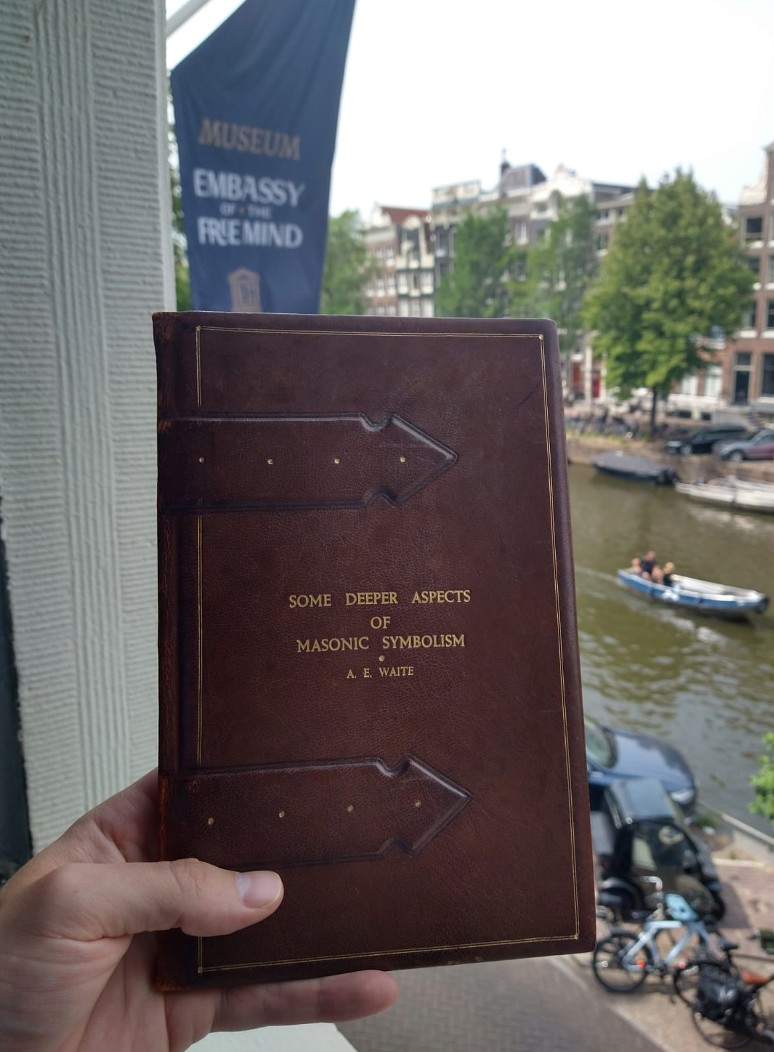
The basement of the Embassy of the Free Mind contains many secrets. This is due to the roughly 30,000 books, manuscripts, periodicals, journals, paintings, microfilms, and other media of esoteric wisdom which line the shelves; shelves not currently available for visitors of our museum to peruse. The goal is to renovate the upper floors of our building and move this ‘depot’ upstairs, where library visitors can freely access them. Of the countless intriguing items I have encountered in our basement, one has stood out to me in recent weeks: The Unknown World.
“It should therefore be understood that this magazine is established chiefly to represent and increase the interest attaching to the investigation of those mysteries which are called transcendental, occult, and mystic.”
A quote taken from the first page of The Unknown World’s very first edition, which could just as easily encapsulate the aims of the Codex.
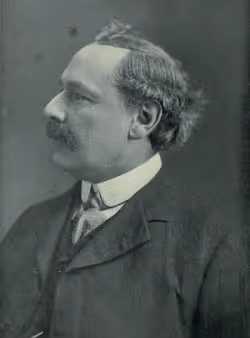
The Unknown World was a late 19th century learned magazine concerned with esotericism, Hermetic philosophy, and the occult sciences, founded by the British poet and scholarly mystic Arthur Edward Waite (1857-1942).
It only ran for 11 issues, first being printed in 1894 before being discontinued just one year later in 1895. The magazine’s subtitle indicates the scope of the journal: ‘A Magazine Devoted to the Occult Sciences, Magic, Mystical Philosophy, Alchemy, Hermetic Archaeology, and the Hidden Problems of Science, Literature, Speculation, and History. Thus, in many ways, The Unknown World had as its object the same ambition our Codex has; All the better then for us to pay homage to an excellent model which came before us!
Furthermore, regarding the publication milieu which focused on such matters, The Unknown World claimed to represent the very first example: ‘The Unknown World has been founded to represent, for the first time in periodical literature, the whole circle of the Occult Sciences.’ Sciences among which Waite includes:
‘White and Black Magic, Necromancy, Divination, Astrology, Alchemy, Witchcraft, Crystallomancy, Elementals and Elementaries, the Rosicrucians, the Illuminati, Esoteric Freemasonry, the Mysteries, the Mystics, Hermetic Philosophy, the Archaeology of the Secret Sciences’.
Amazingly, we have the very first edition of the first volume of The Unknown World, with pages that are still uncut! Towards the end of the first volume’s introduction, Waite writes that the journal will be ‘devoted to the “superstitions” of the past, or, more correctly, to the science of the future’. The first issue ran just forty-eight pages; I include here the titles of articles (with my comments in brackets) included in the first edition:
‘The Threefold Division of Mysticism’ [Which the author states includes (1) Transcendental Science, (2) Transcendental Philosophy, and (3) Transcendental Religion]
‘What is Alchemy?’ [Alchemists mentioned include Raymond Lully, Nicholas Flamel, Jan Babtist van Helmont, Michael Sendivogius, and Mary Ann Atwood]
‘Chapters in Exposition of the New Gospel of Interpretation’ [Entirely devoted to the importance of Hermes the Egyptian]
‘The Theosophical Revival’ [An article written by A.P. Sinnet about theosophy, and its aims defined as ‘in search of full and exact comprehension of the laws actually governing the spiritual progress of the immortal principle in Man’]
‘Mysticism in Poetry’ [Alfred Tennyson gets a lot of attention here]
‘The Hermetic Doctrine of Paracelsus’ [Described within as ‘The Luther of the occult sciences, an audacious reformer in medicine and a no less bold innovator in Alchemy, who in this respect influenced all the posterity of Mysticism…]
‘Hermetic Poets’ [Not an exhaustive list, but mentions: Pythagoras, Jean de Meung, Guillaume de Loris, Johannes Aurelius Augurellus, Marcellus Palingenius Stellatus]
‘The Rosicrucian Mystery’ [Defined as ‘the most fascinating of the secret societies which are openly known to have been connected with Mysticism’]
‘Francis Bacon and the Mystics’ [A very intriguing article that includes numerous quotes from manuscripts, a view of Bacon as a full-blown occultist]
‘The Place of Evil in God’s Order: A Presentation of Christian Theosophy’ [A very philosophical article utilizing rational logic for Christian-mystical purposes, a great example of ‘irenicism’]
‘The Soul’s Hope’ [A poem]
‘Mysticism and the Canon’ [An article detailing the role of mysticism and mystics in the Western theological Canon]

The first issue seems to have, in addition to Waite himself, at least one other contributor, but it is not exactly clear. It appears that Waite wrote some of the initial articles, with the British theosophist A.P. Sinnett being indicated to have written the piece on Theosophy. Moreover, throughout the first issue there are lengthy verbatim passages - sometimes an entire page - taken from works of various authors. This would perhaps amount to a form of plagiarism today, but since they do indicate the original authors, perhaps this was acceptable in the period. There are many quotes from Eliphas Levi sprinkled throughout the piece dealing with mysticism and the Western canon.
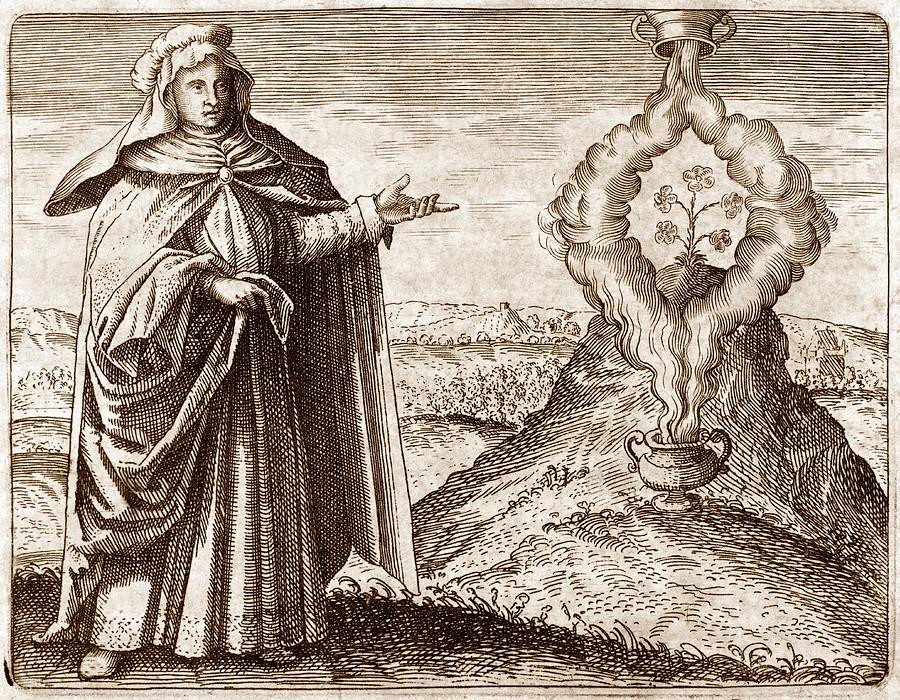
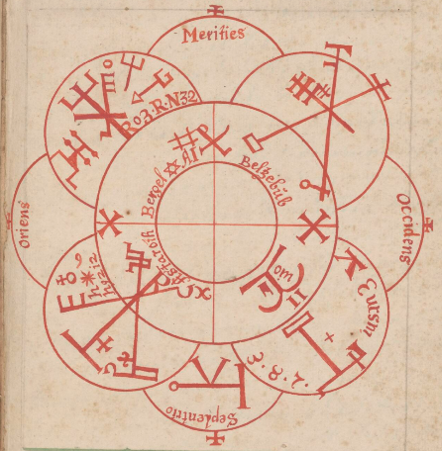
Most, if not all, of the drawings which appeared in The Unknown World and featured throughout this article were made by Isabelle de Steiger (1836-1927), an English painter, theosophist, and occultist. As was the case for Pamela Colman Smith who composed the images for the ‘Rider-Waite’ Tarot deck, women are often left out of the picture. In addition to paintings and drawings, Isabelle also did a lot of translation work for the journal - for example, in the final issue of The Unknown World, she translated passages from the mystical text The Cloud Upon the Sanctuary (1793) written by the German mystic writer Karl von Eckartshausen. Fortunately, we have this digitized, and you can view the images, as well as access the entire catalogue of The Unknown World by clicking the link below.

At the back of the journal there are editorial notes, as well as ‘The Unknown World’s Guide to Current Literature’. Concerning this guide, they invite readers who would like to advertise in the journal to send books related to ‘transcendental philosophy and science’ to the publishers of TUW. It was clearly intended that in the following issues this section would promote books related to topics deemed relevant for readers of The Unknown World.
There are a few fantastic examples of journals which have emerged in the modern period dedicated to these topics. One contemporary with The Unknown World, though primarily concerned with theosophy rather than a general journal of esotericism was Lucifer: A Theosophical Magazine designed to bring to light the hidden things of darkness, curated by Helena Blavatsky and Mabel Collins. Gnosis: A Journal of the Western Inner Traditions, which ran from 1985-1999 represents another excellent, more recent example - one which we may highlight in a future Codex. Since we share the aims of these and other now-expired journals, it feels right for us to honor them. The Unknown World, though it only ran for a few issues, represents an initial impulse into historically studying these currents of ‘forbidden knowledge’ in the form of a periodical; shoulders upon which the Codex hopes to stand for years to come.


Written by
Corey Andrews
Corey Andrews is a PhD candidate at the University of Amsterdam and a researcher working for the Ritman Research Institute. His research focuses primarily on 17th and 18th century Rosicrucianism and the life and works of Jan Amos Comenius (1592-1670).

.avif)