


.svg)
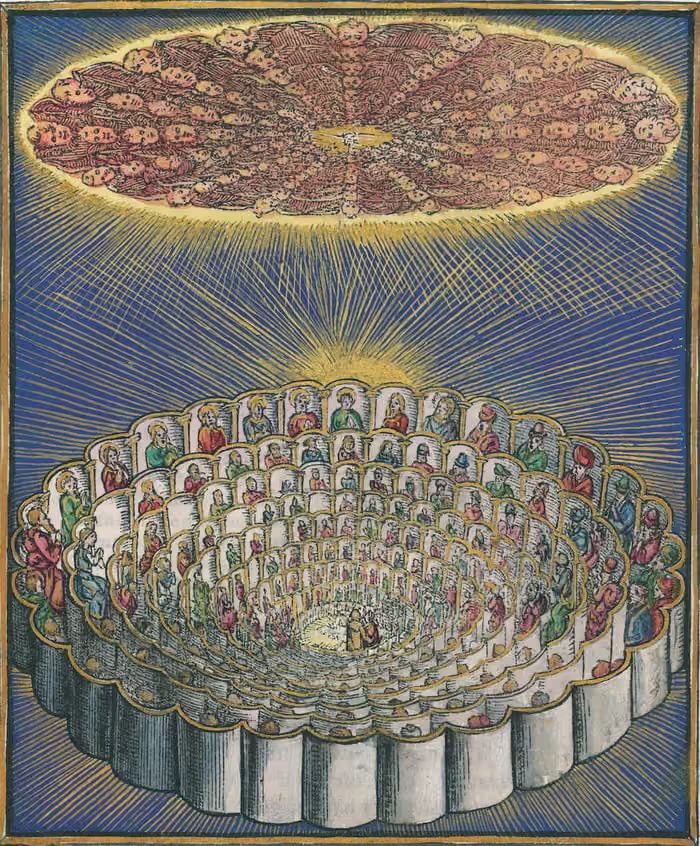
Flammarion Engraving, from 'L'atmosphère: météorologie populaire' by Camille Flammarion, 1888.

Flammarion Engraving, from 'L'atmosphère: météorologie populaire' by Camille Flammarion, 1888.

This manuscript preserves substantial portions of Mathesis, one of the most expansive astrological handbooks to survive from the 4th-century Roman Empire. The text was copied in the 11th century, probably in the Benedictine milieu of Fleury (Saint-Benoît-sur-Loire), a major center of learning on the Loire.
A contemporary pen trial, invoking St. Benedict and later Fleury library notes, suggests that the codex once belonged to the abbey’s collection. In the 12th century, a small gathering was added with unrelated didactic verse, reflecting a living volume that continued to circulate and be augmented.
Made on parchment, the book shows the hallmarks of monastic production: careful pricking and ruling to guide a clear, even script; disciplined page design with rubricated headings; and gatherings sewn through their centers. Multiple hands likely collaborated, a common practice in busy scriptoria. The text opens with capitula (chapter summaries) before proceeding into the treatise, which in this copy breaks off mid-work due to losses.
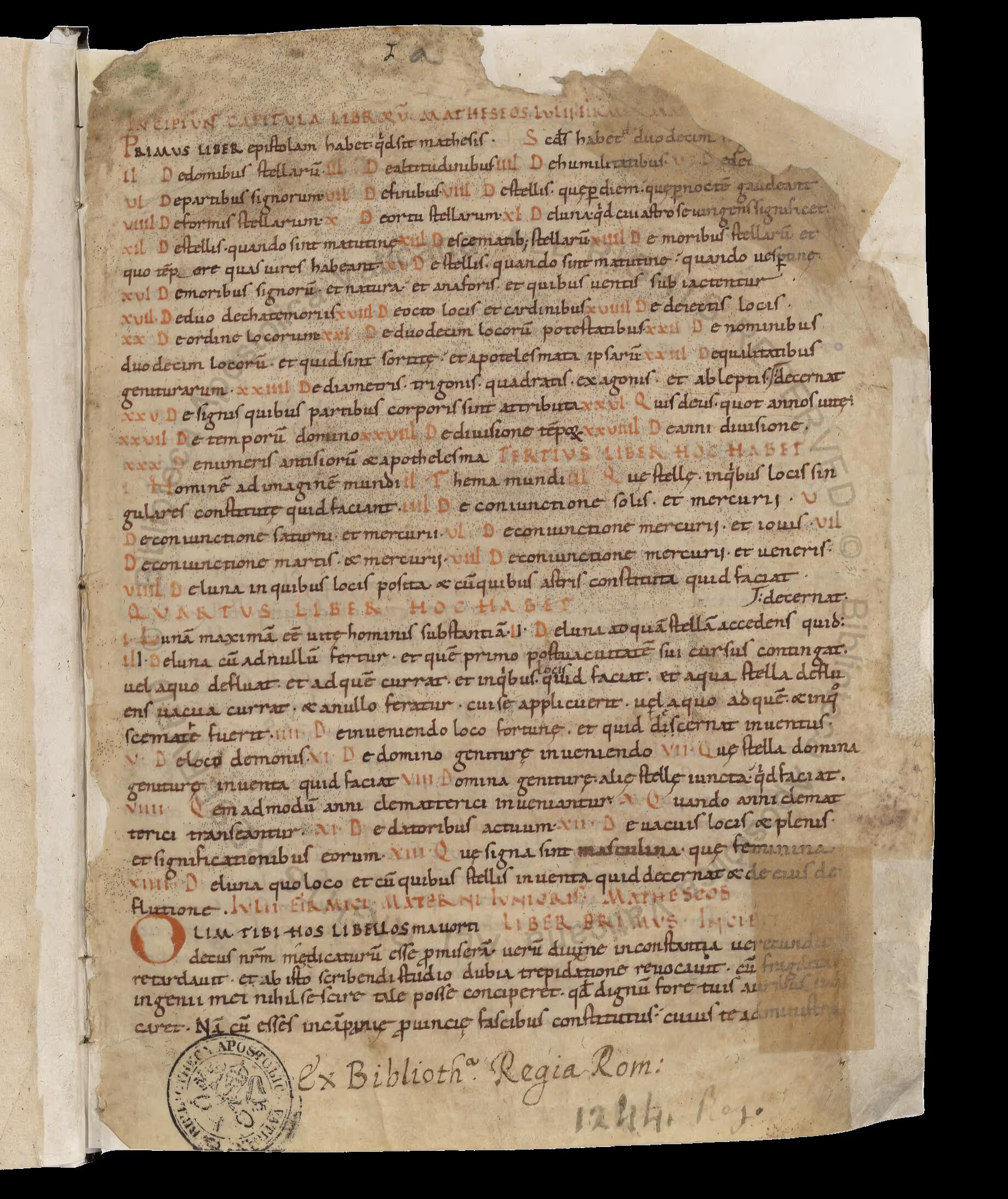
To modern eyes, it may seem paradoxical that a Christian monastery copied a pagan astrological compendium. But in the 10th–11th centuries, the distinction between permissible “astronomy” and forbidden “judicial astrology” was well understood. Monastic readers mined antique authorities for natural science—calendar reckoning, celestial motions, medical and meteorological lore—while moralists drew clear boundaries against fatalistic horoscope practice.
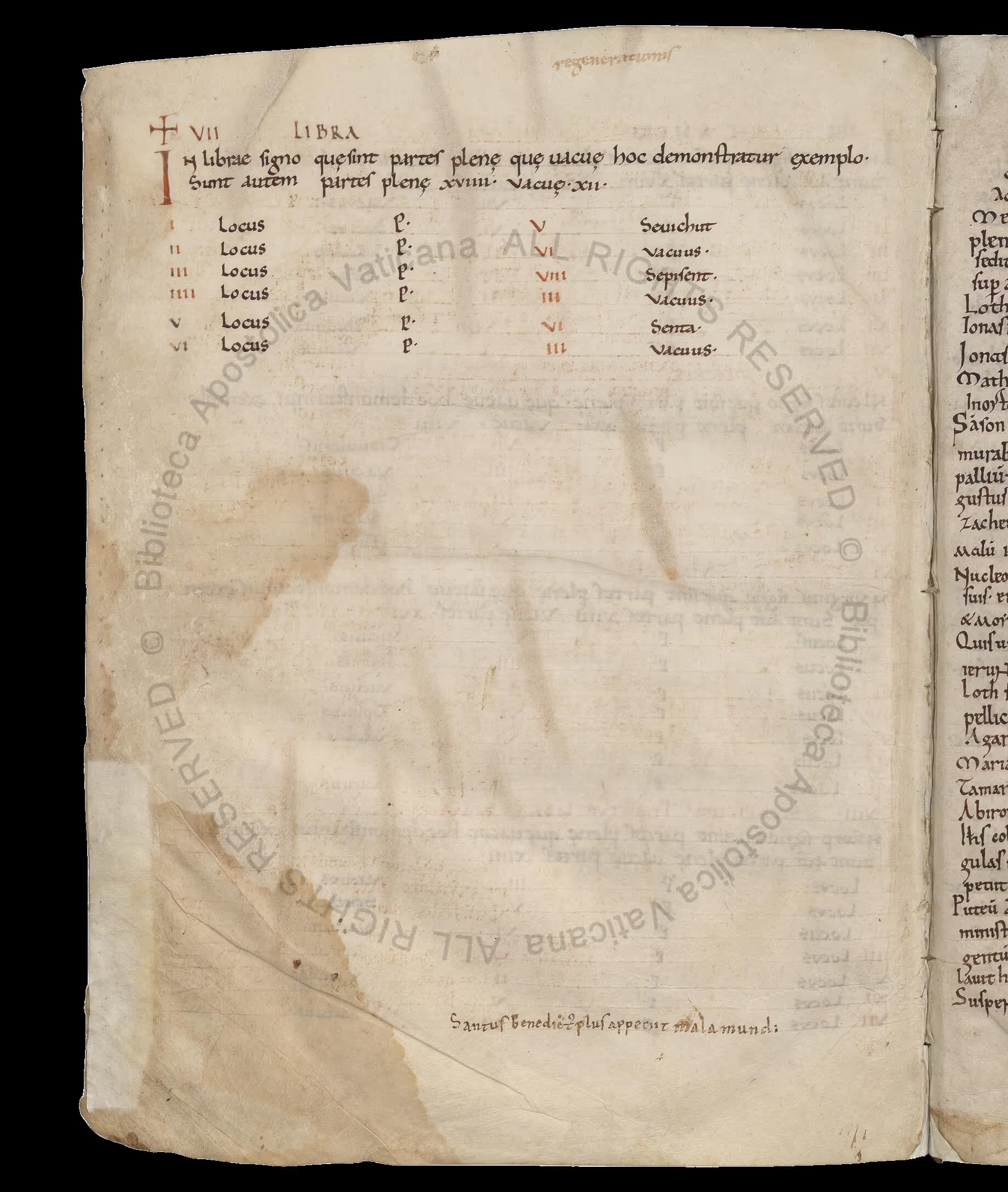
Housing Mathesis alongside computistical and grammatical texts, a library like Fleury’s embodied that tension and curiosity. The codex later passed through notable humanist hands (including the Petau family and Queen Christina of Sweden), joining the Vatican’s Reginensis collection. Today, it stands as evidence of how monastic workshops preserved, organized, and reframed classical scientific knowledge for medieval Christian study. Though far from Amsterdam and the physical holdings of BPH, this manuscript shows how astrology was received in the centuries before print—and long before our collection took shape.

Written by
Charlotte Zhu
Charlotte Zhu manages the Amsterdam Antiquarian Bookstore and is a candidate at the University of Amsterdam. Her research focuses on the cross-cultural transmission of ancient astrological texts.


.avif)